Multimodal B2B Logistics in India: Designing a National Distribution Plan
Key Takeaway
Plan multimodal B2B logistics in India by comparing surface, rail and air across urgency, cargo suitability, transit and total cost.
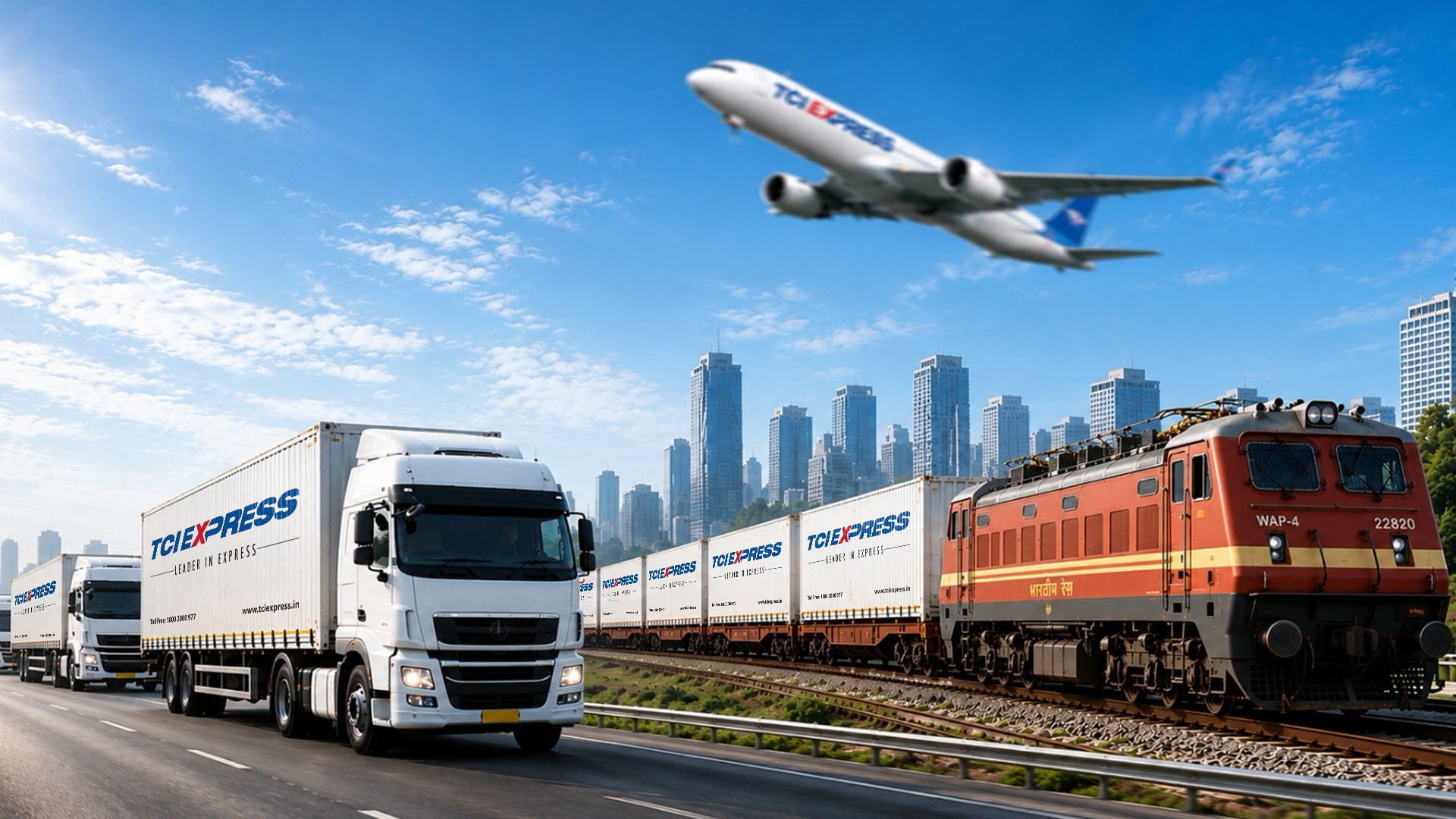
Multimodal B2B logistics uses the transport mode best suited to each shipment or journey stage. Surface transport may provide pickup, broad network reach and final delivery. Rail may support suitable long-distance cargo. Air may protect an urgent production, service or customer commitment. The objective is not to add modes unnecessarily. It is to match speed, capacity, handling and cost to the business requirement.
A national distribution plan should therefore begin with shipment data, not a preference for road, rail or air. The planner needs to understand the cargo, lane, frequency, required delivery date, cost of delay and operating constraints before selecting a mode or combination.
What is multimodal B2B logistics?
Multimodal B2B logistics coordinates two or more transport modes within a planned commercial movement or distribution network. A shipment may travel by surface to a rail terminal, use rail for the main long-distance leg and return to surface transport for destination delivery. An urgent consignment may use surface pickup, an air connection and surface last-mile delivery.
Some businesses also use different modes across their shipment portfolio without combining them in every individual consignment. Routine replenishment may move by surface, suitable long-distance volume by rail and production-critical cargo by air. This portfolio approach is often more practical than forcing every shipment through the same service.
Begin with a shipment and lane profile
A responsible recommendation requires enough information to test whether the proposed plan can work from pickup to final delivery. The business should document:
- Exact origin and destination pin codes
- Package count, dimensions, actual weight and total volume
- Commodity description, value and handling restrictions
- Shipment frequency and monthly or seasonal volume
- Pickup readiness and operating cut-off
- Required delivery date and the business consequence of delay
- Documentation and e-way-bill responsibilities
- Loading, unloading, stacking and transfer limitations
- Tracking, reporting and electronic proof-of-delivery requirements
- Acceptable contingency options
TCI EXPRESS operational view
TCI EXPRESS begins with the customer’s operating requirement rather than selecting a mode in advance. The team reviews the origin and destination, shipment frequency, dimensions, weight, commodity, urgency, required delivery date and available road, rail or air connections. Regular and larger long-distance shipments may be suitable for rail when a practical connection is available and cost is important. Surface transport supports broad distribution and the first-mile and last-mile legs. Air is evaluated for urgent or business-critical cargo where the consequence of delay justifies the additional cost.
The recommendation also considers pickup cut-offs, capacity, handling, documentation, consignee readiness and the customer’s regular distribution pattern. Special cargo, non-standard lanes, custom operating arrangements and time-bound commitments may require technical feasibility and commercial approval before confirmation.
How should surface, rail and air be compared?
The comparison must use the same shipment, origin, destination and required delivery outcome. Comparing a terminal-to-terminal rail time with a door-to-door surface transit produces a misleading result. Every option should include pickup, processing, transfers, main movement, destination handling and final delivery.
Surface Express
Surface transport can support broad door-to-door distribution, recurring commercial shipments and lanes where road connectivity provides a practical balance between reach, transit and cost. It may also connect customers, branches, airports and rail terminals within a multimodal movement.
The plan should consider road distance, pickup cut-off, route schedule, intermediate handling, vehicle capacity, congestion, weather, delivery access and the required service commitment. Surface should not be chosen only because it appears familiar or has a lower base rate.
Rail Express
Rail can be evaluated for larger, regular or consolidated shipments on suitable long-distance lanes where a workable rail connection exists. It may provide a useful capacity and cost position between surface and air, but the complete journey still depends on first-mile collection, terminal access, schedule, handling and destination delivery.
Rail is not automatically suitable for every long-distance shipment. The cargo must tolerate the planned handling and schedule, and the promised delivery date must include terminal and transfer time. Urgent, very small or poorly connected movements may be better served through another mode.
Domestic Air Express
Air can serve urgent, high-priority or production-sensitive consignments when the business cost of delay justifies the higher freight expense. The comparison should include airport acceptance, cargo-security requirements, flight schedule, capacity, chargeable weight and the surface movement needed at both ends.
The shortest flight duration is not the complete transit time. Pickup, origin processing, airport cut-off, security controls, destination receipt and final delivery remain part of the customer outcome.
A practical mode-selection framework
Step 1: Segment shipments by business consequence
Separate production-stopping, customer-critical and emergency consignments from routine replenishment. An urgent component may justify air even when its freight rate is higher. Predictable stock movement may be better planned through surface or a suitable rail option.
Step 2: Test lane serviceability
Confirm pickup and delivery serviceability at the actual pin codes. For rail or air, also confirm the relevant terminal or airport connection and the surface plan around it. National network scale does not replace lane-specific confirmation.
Step 3: Check cargo suitability
Review dimensions, chargeable weight, declared value, packaging, transfer exposure, security, documentation and restricted-goods conditions. Pharmaceutical, dangerous, high-value, fragile and temperature-sensitive cargo needs shipment-specific evaluation.
Step 4: Calculate door-to-door transit
Start the transit clock at the agreed operational point and end it at the required delivery milestone. Include pickup cut-off, consolidation, terminal transfer, connection schedule, destination processing and consignee availability.
Step 5: Compare total logistics cost
The base freight rate is only one cost. A business may also incur pickup, terminal, handling, packaging, insurance, last-mile, inventory, delay, emergency replacement and administration costs. The suitable mode is the one that protects the required outcome at a supportable total cost.
Step 6: Agree on visibility and exception ownership
Tracking should follow the entire shipment, including mode transfers. The customer should know which milestones are visible, who responds to a missed connection and how an alternative is assessed.
How should total logistics cost be calculated?
There is no responsible universal claim that multimodal planning reduces expenditure by a fixed percentage. Savings depend on the customer’s existing mode allocation, lane mix, shipment profile, inventory policy and service failures.
A lane-level comparison can include:
- Base freight and applicable surcharges
- First-mile and last-mile charges
- Terminal, consolidation and trans-shipment handling
- Packaging, loading and unloading
- Insurance or risk-cover arrangements
- Inventory held because of transit variability
- Production downtime or missed-sales exposure
- Emergency replacement shipments
- Damage, shortage and claims administration
- Tracking, reporting and integration effort
TCI EXPRESS view on cost optimisation
TCI EXPRESS reviews more than the quoted freight rate when assessing a lane. The team considers shipment frequency, volume, chargeable weight, pickup and delivery requirements, route distance, handling, mode transfers, urgency and the operational cost created by a missed commitment. A lower rate may not be economical if it increases inventory, delays production, creates an emergency replacement movement or requires repeated customer escalation.
The customer’s shipment portfolio can therefore be divided by business need. Predictable regular cargo can use a planned surface or suitable rail service, while urgent consignments can move through air or another time-bound option. This allocation helps control cost without applying a slower or faster mode to every shipment.
When is a multimodal plan unsuitable?
Adding a mode creates at least one additional interface. A multimodal arrangement may be unsuitable when the lane lacks a dependable connection, the shipment is too urgent for consolidation, the cargo cannot tolerate transfers, documentation is incomplete or the quantity does not support the proposed operating model.
It may also be unsuitable when:
- The first-mile or last-mile distance removes the expected advantage
- The shipment misses the terminal or airport cut-off
- The cargo requires uninterrupted temperature control that has not been qualified
- Package dimensions or commodity restrictions prevent acceptance
- The consignee cannot receive within the planned window
- The customer cannot provide the required documentation
- The delivery consequence requires a simpler or faster direct plan
How should mode transfers be controlled?
Every transfer should have an identified custody event. The operating plan should define receipt, package-count verification, condition checks, scanning, documentation, handling responsibility and the next connection.
Useful customer milestones include pickup confirmation, origin processing, dispatch, transfer receipt, main-mode departure, destination receipt, out-for-delivery, delivery and e-POD availability. Planned and actual timestamps should be distinguishable.
If a connection is missed, the response should identify the shipment, last verified event, responsible team, available alternative and next customer update. TCI EXPRESS uses central command and zonal escalation support for cases requiring coordinated action, with nearby branches, service points and approved partners assessed where appropriate.
Use a pilot before changing the full network
A representative pilot can test whether the proposed mode allocation works in practice. It should include normal lanes, difficult destinations and realistic shipment profiles rather than only an easy route.
Measure pickup adherence, complete transit, transfer time, exception frequency, damage or shortage, delivery success, e-POD availability, billing accuracy and escalation response. Agree on definitions before the pilot begins.
How the approach works across B2B industries
TCI EXPRESS serves customers across many industries and does not present one confidential account as a universal example. A common operating pattern is to separate regular replenishment from exceptional demand. Planned, higher-volume cargo on suitable long-distance lanes can be assessed for rail, while surface transport connects the origin, terminal and final destination. Routine door-to-door distribution can remain on surface routes. An urgent component or time-critical consignment can be evaluated for air.
This structure gives the customer a repeatable channel for normal shipments and an approved alternative when urgency changes. The result should be measured through lane-level transit, exception frequency, total cost and delivery performance rather than an unsupported general percentage.
How TCI EXPRESS supports multimodal B2B distribution
TCI EXPRESS provides Surface Express, Rail Express and Domestic Air Express services that can be evaluated individually or as part of a coordinated distribution plan. Businesses can review the service pages at https://www.tciexpress.in/surface-express.aspx, https://www.tciexpress.in/rail-express.aspx and https://www.tciexpress.in/domestic-air-express.aspx.
Customers should begin with pin-code serviceability at https://www.tciexpress.in/pincode-enquiry.aspx and submit lane, cargo and delivery requirements through https://www.tciexpress.in/business-enquiry.aspx. The final recommendation remains subject to shipment suitability, capacity, documentation and applicable commercial terms.
Final takeaway
A strong multimodal plan is not measured by the number of modes it uses. It is measured by how well the complete journey supports the business requirement. Surface, rail and air should be compared using the same cargo, lane, transit definition and total-cost basis.
Begin with shipment data. Segment by urgency. Test serviceability and cargo acceptance. Calculate door-to-door transit. Assign visibility and exception ownership. Then validate representative lanes before changing the wider network.
Frequently Asked Questions
What is multimodal B2B logistics?
It coordinates two or more transport modes within a shipment or distribution plan. Surface may provide pickup and delivery, while rail or air supports a suitable long-distance leg. Businesses can also allocate different shipment categories to different modes without combining modes in every consignment.
Is multimodal logistics always cheaper?
No. The result depends on the lane, cargo, transfers, handling, service requirement and existing baseline. Compare total logistics cost, including inventory, first mile, last mile, delay exposure and administration, rather than claiming a universal percentage saving.
When should a business consider rail?
Rail may suit larger, regular or consolidated cargo on workable long-distance lanes when the schedule, terminal access, handling and delivery date support it. The complete comparison must include first-mile and last-mile surface movement.
When is air commercially justified?
Air may be justified when the financial or operational consequence of delay is greater than the additional freight cost. Cargo acceptance, airport connectivity, chargeable weight, security requirements and final delivery must still be confirmed.
How should businesses choose between surface, rail and air?
Compare the same shipment across serviceability, cargo suitability, complete transit, capacity, handling, visibility, exception response and total cost. Select the mode that protects the required business outcome rather than the one with the lowest isolated rate.