Accelerating EV Fleet Expansion: Driving Sustainable Green Logistics in Indian Express Delivery
Key Takeaway
Explore TCI EXPRESS's EV fleet expansion, zero-emission urban delivery initiatives, and sustainable green supply chain strategies for enterprise logistics.
Introduction: The Shift Toward Environmental Supply Chain Accountability
For modern enterprise organizations, environmental sustainability has evolved from a voluntary corporate goal into an essential operational mandate. Today’s corporate leaders, procurement directors, and supply chain executives face growing expectations from stakeholders, regulatory bodies, and end consumers to eliminate carbon emissions across every layer of business operations.
In commercial distribution, the environmental footprint is closely tied to transportation modes. Freight movement across urban centers and regional highway networks accounts for a major portion of corporate Scope 3 greenhouse gas emissions. For companies seeking to achieve true net-zero operations, decarbonizing commercial logistics is a top priority.
However, transitioning to green logistics presents a key challenge for enterprise leaders: How can a company reduce transport emissions without compromising transit speed, delivery reliability, or cost efficiency?
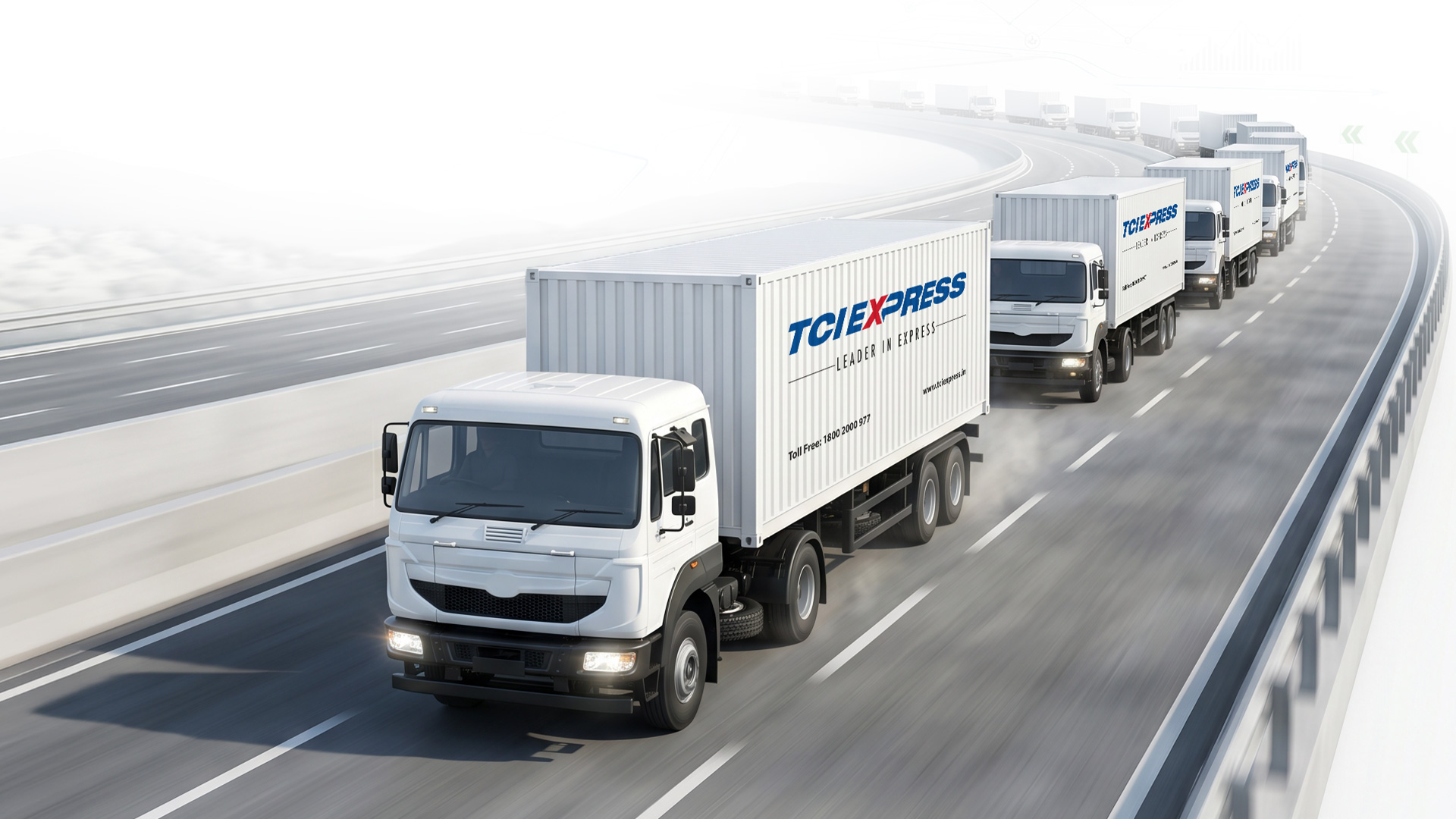
Two decades of managing industrial express networks show that environmental responsibility and operational excellence can go hand in hand. At TCI EXPRESS, we are moving ahead with an enhanced electric vehicle (EV) fleet as part of our long-term commitment to sustainable logistics. By continuing to invest in green infrastructure, we support both our customers' commercial growth and a healthier environment.
1. Decarbonizing the Last Mile: The Power of Enhanced EV Fleets
The last mile of express delivery-moving cargo from regional sorting centers to commercial doorsteps-is often the most carbon-intensive phase of transport. Urban delivery vehicles face heavy traffic, frequent idling, and short stop-and-start cycles that increase fuel consumption in traditional internal combustion engines (ICE).
Deploying dedicated commercial electric vehicles (EVs) directly addresses these last-mile challenges:
- Zero Tailpipe Emissions: Electric vehicles completely eliminate urban exhaust emissions, improving air quality in densely populated commercial centers.
- Reduced Noise Pollution: Quiet EV operations allow early-morning and late-night deliveries in restricted commercial zones without disrupting local communities.
- Insulation from Fuel Volatility: Electric fleets protect shipping operations from sudden fluctuations in diesel and petrol prices, ensuring stable freight rates.
- IoT Fleet Optimization: Advanced battery telemetry and real-time charging monitoring ensure high vehicle uptime and reliable delivery schedules.
[ Solar-Powered Hub ] --? [ Smart Charging Grid ] --? [ Commercial EV Fleet ] --? [ Zero-Emission Last-Mile ]
2. Green Infrastructure: Solar Hubs, Smart Charging, and Route AI
Achieving true sustainability requires looking beyond vehicle tailpipes. A green logistics strategy must incorporate renewable energy infrastructure across sorting centers, warehousing hubs, and dispatch networks.
Solar-Powered Automated Sorting Centers
Modern sorting facilities consume significant electrical energy to power high-speed sorting conveyors, automated barcode scanners, and climate control systems. By installing rooftop solar panels across key sorting hubs, logistics facilities generate clean renewable energy on-site, significantly lowering grid dependency and operational carbon intensity.
Intelligent Route AI & Capacity Utilization
Every unnecessary kilometer driven represents wasted energy. Utilizing advanced route optimization software and machine learning algorithms, dispatch teams plan ideal delivery routes that minimize mileage, avoid urban traffic congestion, and maximize vehicle load factors.
For large-scale manufacturing operations requiring dedicated vehicle allocations between production plants and regional fulfillment centers, C2C Express provides full-truckload (FTL) and milk-run routing designed for high operational efficiency and reduced fuel usage.
3. Multimodal Decarbonization: Combining Rail Express and Electric Delivery
While electric vehicles excel in urban last-mile distribution, long-haul freight requires a different sustainable strategy. The most effective approach for low-carbon long-distance transport is combining high-volume rail freight with electric road fleets.
[ Factory Dispatch ] --? [ EV Feeder Truck ] --? [ Dedicated Rail Express ] --? [ EV Last-Mile ] --? [ Customer ]
High-Volume Rail Freight Integration
Moving freight by rail generates up to 75% fewer carbon emissions per ton-kilometer compared to traditional long-haul road transport. Utilizing dedicated freight corridors and scheduled rail wagons, Rail Express delivers eco-friendly bulk transport connected seamlessly to local pickup and delivery fleets.
Pan-India Highway Express
For ground cargo dispatches across regional networks, Surface Express utilizes containerized, GPS-monitored vehicles serving more than 40,000 locations nationwide with day-definite transit schedules.
Urgent Air Freight Capabilities
When extreme delivery speed is required for critical automotive, electronic, or medical consignments, Domestic Air Express connects major Indian metros within 24 hours and secondary industrial cities within 48 hours.
Global Cross-Border Transport
For businesses expanding into international markets, specialized International Air Express services connect 208 countries worldwide, supported by automated customs processing and global door-to-door tracking.
4. Specialized Vertical Solutions: Healthcare and E-Commerce Green Operations
Different industry sectors require tailored handling protocols to maintain product integrity while supporting corporate sustainability goals.
Temperature-Controlled Cold Chain Operations
Biopharmaceuticals, vaccines, and specialized food products require strict temperature control throughout transit. Utilizing climate-controlled, sensor-monitored vehicles and energy-efficient thermal insulation, Cold Chain Express maintains precise temperature stability for both parcel and full truckload shipments.
E-Commerce & Sustainable Last-Mile Speed
The rapid expansion of online retail has increased the demand for eco-friendly urban fulfillment. Specialized E-Commerce Express solutions support e-tailers with fast order dispatches, cash-on-delivery (COD) management, and low-emission return processing.
5. Empowering Enterprise ESG Compliance & Scope 3 Reporting
For corporate leaders and ESG compliance teams, partnering with a green express carrier provides measurable data for annual sustainability reporting and environmental audits.
Enhancing Scope 3 Carbon Audits
Under modern regulatory standards such as Business Responsibility and Sustainability Reporting (BRSR), listed corporations must track and report Scope 3 supply chain emissions. By shipping cargo through low-emission EV fleets and solar-powered sorting hubs, enterprises directly reduce their audited carbon footprint.
Contractual Delivery Assurances
Sustainability must never come at the expense of reliability. Services backed by a formal Money Back Guarantee (MBG) offer enterprise shippers complete financial peace of mind, guaranteeing that time-bound deliveries arrive on schedule.
Digital Transparency & Self-Service Tools
Enterprise logistics managers require instant access to shipment data and digital tracking:
- Real-Time Shipment Visibility: Monitor cargo movements across all transport modes using real-time shipment tracking.
- Freight Rate Calculators: Plan shipping budgets accurately in advance with the online freight cost estimate calculator.
- Instant Pickup Requests: Book doorstep cargo pickup effortlessly via the schedule a pickup request portal.
- Branch Locator Network: Find local service hubs using the extensive branch locator network.
- Pincode Reach Verification: Check delivery access to remote and semi-urban areas via the pincode accessibility checker.
- Centralized Account Portal: Access digital dockets, invoices, and shipping analytics through the MyExpress customer portal.
6. The Future of Sustainable Logistics: Building a Greener Tomorrow
The transition toward zero-emission logistics is an ongoing journey that requires continuous investment, technological innovation, and long-term vision. Expanding commercial EV fleets, harnessing renewable solar energy, optimizing route networks, and scaling rail integration are key steps toward building a resilient, eco-friendly supply chain.
By combining sustainable transportation methods with asset-backed operational strength, enterprise shippers protect the environment while building supply chains positioned for long-term commercial success.
+---------------------------------------------------------+
¦ TCI EXPRESS SUSTAINABLE LOGISTICS FRAMEWORK ¦
+---------------------------------------------------------+
¦
+-------------------------------------------------+
? ?
+----------------------+ +----------------------+
¦ GREEN INFRASTRUCTURE¦ ¦ OPERATIONAL SPEED ¦
¦ - Enhanced EV Fleet ¦ ¦ - Time-Definite SLAs¦
¦ - Solar Sorting Hubs¦ ¦ - Live Docket Track ¦
¦ - Rail Integration ¦ ¦ - Guaranteed MBG ¦
+----------------------+ +----------------------+
¦ ¦
+-------------------------------------------------+
?
+---------------------------------------------------------+
¦ LOWER SCOPE 3 EMISSIONS & SUSTAINABLE BUSINESS GROWTH ¦
+---------------------------------------------------------+
Conclusion: Partnering for a Sustainable Future
In a rapidly changing economy, sustainable logistics is essential for building a resilient enterprise. By choosing an express logistics partner dedicated to expanding its EV fleet, investing in solar energy, and offering integrated multimodal solutions, businesses can decarbonize their supply chains while maintaining peak operational performance.
At TCI EXPRESS, we remain committed to driving sustainable innovation that supports your growth and builds a cleaner, healthier future.
Ready to Decarbonize Your Enterprise Supply Chain?
Experience fast, reliable, and sustainable express logistics across India and globally:
- Schedule a Pickup Request online in seconds.
- Calculate shipping costs instantly with our Freight Cost Estimate Calculator.
- Locate your nearest green service hub using our Branch Locator.
Frequently Asked Questions
What are the environmental benefits of deploying EV fleets in express logistics?
Commercial EVs eliminate tailpipe emissions, lower noise pollution in urban centers, and significantly reduce carbon emissions per ton-kilometer.
How does TCI EXPRESS integrate EVs into its last-mile delivery network?
EVs are deployed for high-density urban parcel dispatches and intracity corporate customer pickups, supported by dedicated hub charging infrastructure.
How do green logistics practices help enterprise customers meet ESG targets?
By partnering with an eco-friendly express carrier, shippers lower their Scope 3 supply chain carbon footprint and fulfill corporate ESG mandates.