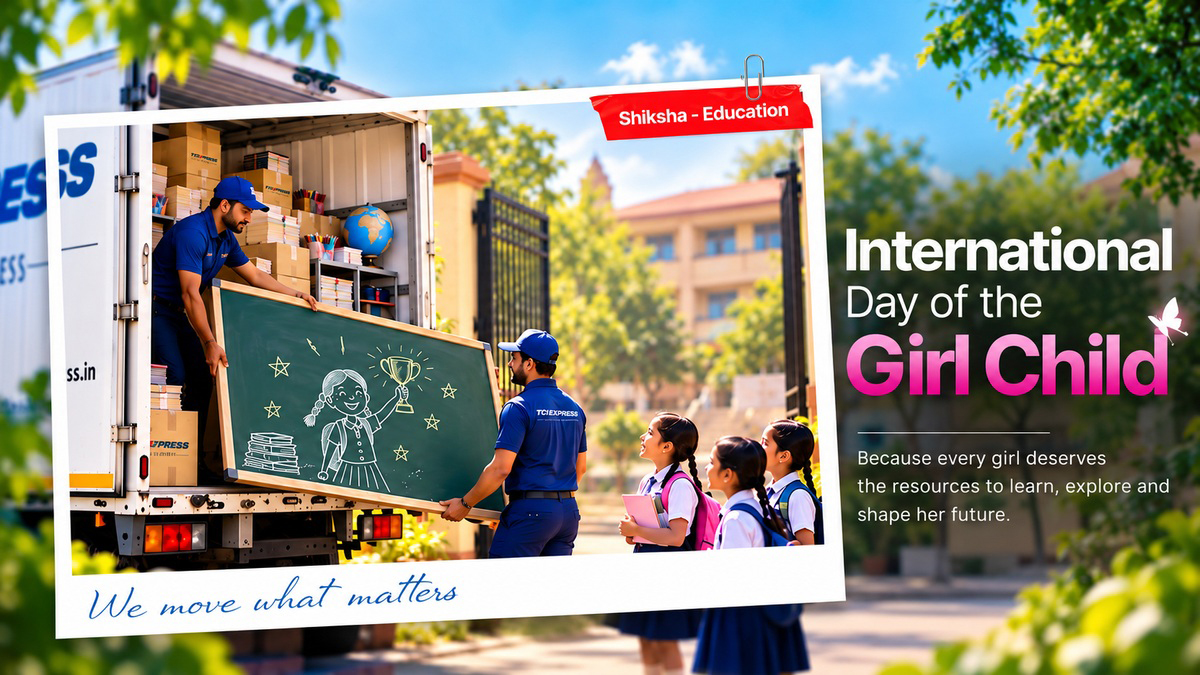
International Day of the Girl Child 2026: Education, Opportunity and Every Girl’s Right to Thrive
Key Takeaway
- Celebrating Rights & Potential: On International Day of the Girl Child 2026 (11 October), TCI EXPRESS highlights the fundamental right of every girl to learn safely, develop her talents, and make informed choices.
- The 2026 Global Theme: Supporting the UN theme "End child marriage and invest in girls' rights" by advocating for sustained investments in education, healthcare, safety, and leadership opportunities for girls.
- TCI EXPRESS Shiksha Initiative: Connecting corporate social responsibility with community empowerment, advancing girl child education, skill development, and inclusive opportunities through programmes like the TCI-DAV Public School.
- From Awareness to Action: Encouraging families, schools, and businesses to eliminate participation barriers, provide practical resources, and actively listen to girls' voices to build a more equitable future.
International Day of the Girl Child 2026, observed on 11 October, calls attention to the rights, voices and potential of girls everywhere. It is also a reminder that a better future begins when every girl can learn safely, develop her abilities, express her ideas and make informed choices about her own life.
For TCI EXPRESS, this message connects with a simple belief: every girl deserves to be valued, heard and supported. Through the company’s Shiksha education initiative and wider community efforts, TCI EXPRESS seeks to support education, skill development and more inclusive opportunities for children and young people.
This observance is not only a celebration. It asks families, schools, communities, businesses and public institutions to consider what still prevents girls from participating fully in education and society, and what practical action can remove those barriers.
What is International Day of the Girl Child 2026?
International Day of the Girl Child is a United Nations observance held every year on 11 October. The United Nations General Assembly adopted Resolution 66/170 in December 2011, establishing the day to recognise girls’ rights and the particular challenges girls face. The first observance took place in 2012.
The United Nations theme for 2026 is “End child marriage and invest in girls’ rights”. The theme connects two important ideas. Girls must be protected from practices that restrict their childhood and choices, and societies must invest in the education, health, safety, participation and leadership that allow girls to shape their own futures.
The day therefore has a clear purpose: to listen to girls, recognise their leadership, address inequality and support conditions in which every girl can grow up safe, educated and empowered.
Why does education matter for every girl?
Education gives a girl more than subject knowledge. A supportive learning environment can help her build confidence, communication skills, curiosity, problem-solving ability and awareness of her rights. It can also expand the choices available to her as she moves towards higher education, employment, entrepreneurship or public service.
Access alone is not the complete answer. A girl must also be able to attend regularly, learn in a safe and respectful setting, use suitable learning resources and receive encouragement from family, teachers and the wider community. Education becomes meaningful when participation leads to learning, personal development and genuine opportunity.
This is why discussions about girl child education should consider the complete learning journey:
- Can the child enter and attend school consistently?
- Does she feel safe and respected while learning?
- Does she have the books, technology and other resources she needs?
- Can she participate in sport, culture, science and leadership activities?
- Is she encouraged to ask questions and express her ambitions?
- Does she receive guidance when moving to the next stage of education?
- Are social or economic barriers limiting her choices?
When these questions are addressed together, education can become a foundation for independence, participation and lifelong learning.
Girls need opportunity as well as encouragement
Encouraging words matter, but girls also need practical opportunities. A child cannot make full use of her talent if learning materials are unavailable, travel is unsafe, facilities are unsuitable or social expectations restrict her participation.
Real support may take many forms. It can mean helping a student remain in school, providing access to books and digital learning, creating safe sanitation facilities, encouraging participation in science and sport, offering career guidance, or ensuring that a girl’s voice is included in decisions that affect her.
Equal opportunity does not require every child to follow the same path. It means that gender should not determine which subjects a girl may study, which skills she may develop or which future she may imagine. Girls should be able to explore their interests and make choices with dignity.
What does it mean to listen to girls?
International Day of the Girl Child also emphasises girls’ voices and leadership. Adults often design programmes for children without giving them a meaningful role in identifying the problems or shaping the solutions.
Listening begins with age-appropriate, safe and respectful participation. Schools and community organisations can ask girls what makes learning difficult, which resources would help them, where they feel unsafe and what ambitions they want to pursue. The purpose is not to place adult responsibilities on children. It is to ensure that decisions reflect their lived experience.
Girls may identify issues that are not visible in attendance figures alone, including a lack of privacy, fear of harassment, pressure to leave school, limited access to technology or the belief that some careers are not meant for them. Their perspectives can help institutions design more relevant support.
How the 2026 theme connects rights with long-term investment
The 2026 United Nations theme asks the world to end child marriage and invest in girls’ rights. Child marriage can interrupt education, restrict choice and expose girls to serious health, safety and social risks. The issue also shows why isolated interventions are rarely enough.
Helping girls remain in school may require cooperation across education, health, child protection, social welfare and community systems. Families may need information and support. Schools must be accessible and safe. Laws and public programmes must protect children. Girls themselves must be able to seek help and participate in decisions.
Investment in girls’ rights is therefore broader than financial spending. It includes the consistent attention, institutional capacity, trained people, safe facilities, responsive services and social commitment needed to turn a right into everyday reality.
TCI EXPRESS and the Shiksha education initiative
TCI EXPRESS describes education as one of the focus areas within its community and corporate social responsibility work. Published company information identifies Shiksha as an educational initiative for underprivileged communities and places education alongside healthcare, skill development, sports and rural welfare in its wider social-development approach.
The official TCI EXPRESS education page explains that the company supports initiatives intended to advance education, skill development and community empowerment. It also describes the TCI-DAV Public School in Jamhar, Khunti, Jharkhand, established through the company’s CSR arm and affiliated with the Central Board of Secondary Education. The published description notes a focus on accessible education for tribal children and particular attention to girls and gender equality.
TCI EXPRESS annual reports provide formal information about the company’s social initiatives and governance. Readers seeking the latest approved disclosures can consult the company’s annual reports and its overview of community and social initiatives.
How can businesses support girls’ education responsibly?
Businesses can contribute to girls’ education when their support is practical, respectful and based on real community needs. A useful programme should have a clear purpose, suitable partners, safeguards for children and a simple way to understand whether the support is helping.
- Work with credible partners: Local schools, recognised civil-society organisations and experienced education institutions can help identify needs and deliver support appropriately. Responsibilities and reporting expectations should be clear.
- Protect privacy and dignity: Children’s names, photographs, personal stories and education records require careful handling. Consent and child-safeguarding processes should guide every public communication.
- Look beyond activity totals: The number of books distributed or events held describes activity, but it does not always show what changed for students. Programmes should use suitable measures such as participation, continued learning or access to new opportunities.
- Support continuity: Education develops over time. Where possible, short-term assistance should connect with follow-up, maintained learning resources, teacher support or transition guidance.
- Listen to girls: Girls should have safe, age-appropriate ways to explain the barriers they face and whether a programme is useful. Their feedback can make education support more relevant.
What can families and communities do?
Progress is also built through everyday choices. Families can encourage girls to attend school, give them time and space to study, listen to their interests and share household responsibilities fairly. Communities can challenge stereotypes, support safe routes to school and create environments in which girls can participate without fear.
Teachers and mentors can introduce girls to a wide range of subjects and careers. Employers can offer age-appropriate career awareness, scholarships or mentoring through properly governed programmes. Public institutions can strengthen the services and protections that keep children safe and learning.
No single action will remove every barrier, but consistent support across home, school, community and public systems can expand a girl’s choices.
A better tomorrow begins by respecting every girl’s rights
International Day of the Girl Child 2026 reminds us that girls are not only beneficiaries of development. They are students, thinkers, creators, athletes, future professionals, entrepreneurs, community leaders and decision-makers. Their ideas and ambitions deserve attention today.
TCI EXPRESS stands for a future in which every girl is valued, heard and supported. Through Shiksha and its wider community initiatives, the company remains committed to the role that education and skill development can play in building more inclusive opportunities.
The most meaningful way to observe the day is to move from appreciation to action: listen to girls, protect their childhood, support their education and help create the conditions in which they can choose and shape their own future.
Frequently Asked Questions
When is International Day of the Girl Child observed?
International Day of the Girl Child is observed every year on 11 October. It is a United Nations observance that brings attention to girls’ rights, voices, education, safety and participation in society.
Why is International Day of the Girl Child celebrated?
The day was established to recognise girls’ rights and draw attention to the barriers that can restrict their education, health, safety and choices. It also celebrates girls as students, leaders and contributors whose views should be included in decisions affecting their lives.
What is the theme for International Day of the Girl Child 2026?
The United Nations theme for 2026 is “End child marriage and invest in girls’ rights”. The theme calls for stronger protection of childhood and sustained investment in education, health, safety, participation and opportunities for girls.
When was International Day of the Girl Child established?
The United Nations General Assembly adopted Resolution 66/170 on 19 December 2011. The first International Day of the Girl Child was observed on 11 October 2012.
Why is girls’ education important?
Education helps girls develop knowledge, confidence, communication, problem-solving ability and awareness of their rights. Meaningful education can widen future choices, but it requires more than enrolment. Girls also need safe learning environments, suitable resources, regular participation and encouragement to continue to the next stage.
What is the TCI EXPRESS Shiksha initiative?
TCI EXPRESS identifies Shiksha as an education-focused social initiative for underprivileged communities. Published company information places it within a wider social-development approach that also covers healthcare, skills, sports and rural welfare. Current programme details should be taken from official TCI EXPRESS disclosures.
How can organisations support girls’ education?
Organisations can begin by understanding local needs and working with credible schools or community partners. They should protect children’s privacy, address practical barriers to learning, set appropriate measures, support continuity and give girls safe ways to share their views.
What can families do to support a girl’s education?
Families can support regular attendance, provide time and space for study, listen to a girl’s interests and encourage her to explore different subjects and careers. Sharing household responsibilities fairly and taking her ambitions seriously can also help her continue learning.
Is International Day of the Girl Child only about education?
No. Education is an important part of the observance, but the day addresses the full range of girls’ rights. These include safety, health, protection from child marriage and violence, freedom from discrimination, participation in decisions and the opportunity to develop and lead.
References & Sources
- TCI EXPRESS Official International Day of the Girl Child 2026 LinkedIn Post ↗
- United Nations: International Day of the Girl Child ↗
- United Nations General Assembly Resolution 66/170 ↗
- TCI EXPRESS Education Initiatives: Shiksha & TCI-DAV Public School ↗
- TCI EXPRESS Social & Community Development Initiatives ↗
- TCI EXPRESS Annual Report 2024–25: ESG & CSR Governance Disclosures ↗