The People Behind Every Delivery: Why Employee Wellness Matters in Express Logistics
Key Takeaway
Explore why employee wellness in express logistics requires safe work, preventive health, supportive managers and meaningful employee participation.
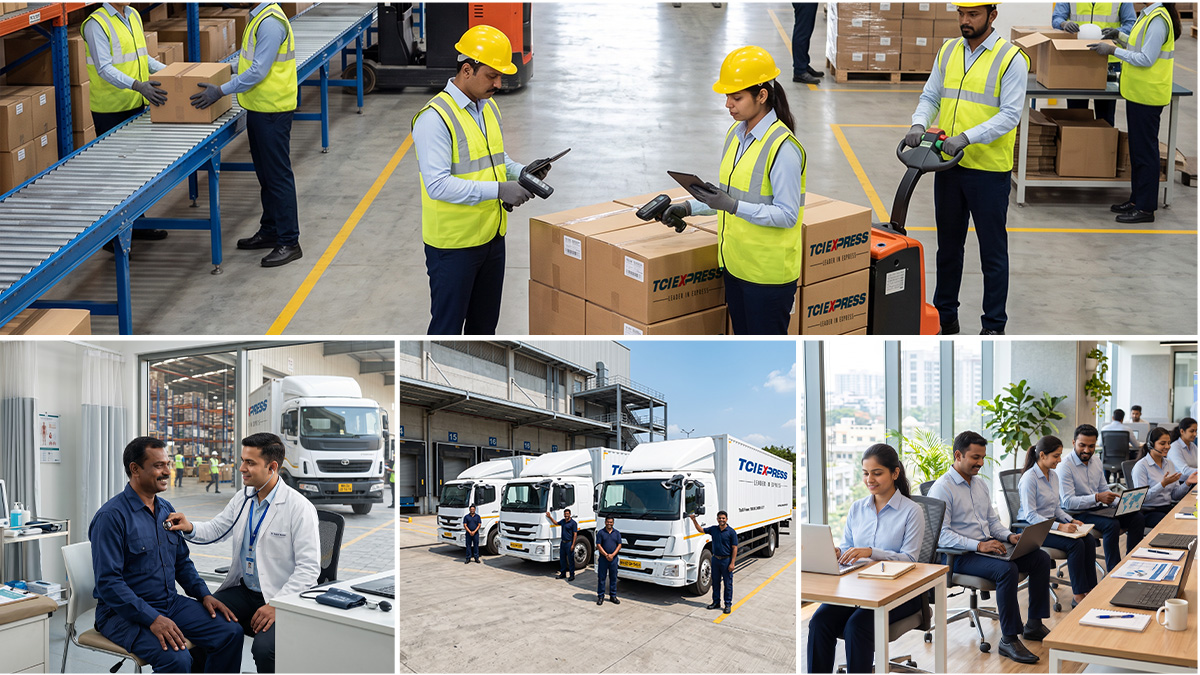
Employee wellness in express logistics is part of how a dependable delivery network is built. Every pickup, scan, sort, transfer, customer update and final delivery depends on people making sound decisions while working within defined processes and time windows. Technology can improve visibility and speed, but it does not replace a healthy, prepared and supported workforce.
TCI EXPRESS recognises the people behind every delivery and treats wellness as an important part of supporting a motivated and productive workforce. This commitment is most meaningful when it is reflected in regular activities and everyday management, rather than limited to a single occasion.
What does employee wellness mean in a logistics workplace?
Employee wellness is broader than physical fitness. In an express-logistics environment, it can include occupational safety, preventive health, suitable working conditions, mental wellbeing, reasonable work organisation, respectful supervision, role clarity, learning opportunities and access to support when an employee needs it.
The International Labour Organization explains that workplace health promotion is most effective when it complements occupational safety and health measures and is integrated into management practices. This distinction matters. A wellness activity cannot compensate for an unmanaged safety risk, excessive workload or an environment in which employees cannot raise concerns.
A practical approach therefore considers several connected areas:
- Safe facilities, equipment and operating procedures
- Working hours, rest, workload and fatigue-related risks
- Preventive health awareness and access to appropriate support
- Manager behaviour, communication and psychological safety
- Training, role clarity and confidence in handling exceptions
- Respect, inclusion and freedom from harassment or discrimination
- Employee participation in identifying and improving workplace conditions
Why does workforce wellbeing matter in express delivery?
Express delivery involves coordinated work across branches, sorting centres, line-haul operations, customer-support teams and last-mile delivery points. A disruption in one part of this chain can affect colleagues and customers elsewhere. For that reason, employee wellbeing and operating quality are connected, although no single wellness initiative should be presented as a guarantee of delivery performance.
Attention supports accurate work
Shipment identification, route allocation, documentation checks and exception handling require attention. Fatigue, unclear responsibilities or inadequate instruction can make consistent execution harder. Suitable training, clear escalation paths and well-designed work practices help employees respond without relying on guesswork.
Support helps teams manage exceptions
Weather, traffic, capacity, documentation and consignee-related problems can change an operating plan. Employees should know who can make a decision, when to escalate an issue and how the customer will be informed. Supportive management is especially important when a frontline employee encounters a problem that cannot be solved at the local level.
Healthy workplaces can strengthen participation
Employees often see practical risks and improvement opportunities before they appear in a management report. A workplace in which people can report a hazard, near miss, process gap or wellbeing concern without fear is better placed to learn from everyday operations.
What are the main wellbeing risks in logistics work?
Risks differ by role and location. An office employee, sorting-centre team member, customer-support executive and delivery associate do not have the same work environment. A credible programme begins by identifying the actual risks for each group rather than applying one activity to everyone.
- Manual handling, repetitive movement and unsuitable ergonomics
- Vehicle movement, loading areas and interaction with material-handling equipment
- Heat, noise, ventilation, lighting or weather exposure
- Long, irregular or demanding work periods and insufficient recovery
- High work pace during seasonal or unexpected volume peaks
- Customer conflict, unclear expectations or limited decision authority
- Isolation, stress or reluctance to discuss mental-health concerns
- Gaps in induction, refresher training or emergency preparedness
The World Health Organization identifies excessive workloads, long or inflexible hours, unsafe physical conditions, unclear roles and limited colleague or supervisor support among the workplace factors that can affect mental health. The appropriate response is not to diagnose employees informally. It is to improve working conditions, train managers, provide suitable support routes and encourage timely professional help where required.
What does a practical employee-wellness programme include?
1. Start with risk assessment and employee participation
Wellness priorities should reflect the work being performed. Facility observations, safety reviews, employee feedback, absence patterns, near-miss information and recurring operating issues can help identify where attention is needed. Employees and their representatives should be meaningfully involved because they understand the demands of their roles.
2. Build preventive health into routine management
Preventive health measures may include awareness sessions, role-appropriate health checks, ergonomic improvements and access to qualified medical guidance. Any personal health information must be handled confidentially and in accordance with applicable policy and law.
3. Equip managers to respond appropriately
A manager does not need to act as a clinician. Managers do need the skills to listen, recognise when an employee may require support, respond respectfully, maintain confidentiality and direct the person to the appropriate resource. WHO recommends manager training, open communication and active listening as part of protecting mental health at work.
4. Make support accessible across locations and shifts
A distributed logistics network needs support that employees can actually reach. Communication should explain what is available, who is eligible, how to seek assistance and how privacy is protected. Where roles operate across shifts or remote locations, access should not depend only on being present at a head office during standard hours.
5. Measure whether the programme is useful
Participation counts show reach, but they do not prove impact. Organisations can also review whether identified risks were addressed, whether managers completed relevant training, whether employees know where to obtain help and whether recurring issues are being closed. Measurements should be interpreted carefully and never used to stigmatise an individual or team.
How TCI EXPRESS describes its people-first approach
The official TCI EXPRESS social post states that caring for the people behind each delivery has made wellness a key priority. The company’s published ESG material also describes employee health and safety, workplace conditions, health assessments and wellbeing initiatives. Readers interested in joining the organisation can review the TCI EXPRESS careers page, while general company information is available through the TCI EXPRESS company profile.
At its corporate office, TCI EXPRESS organises employee-wellness activities at regular intervals as part of its continuing focus on workforce health and engagement. These measures include health assessments, medical insurance, stress-management programmes, yoga sessions, fitness activities and outdoor games.
These activities address different aspects of wellbeing. Health assessments support preventive awareness, while medical insurance provides eligible employees with financial support under the applicable policy terms. Stress-management and yoga sessions encourage employees to pay attention to mental and physical wellbeing. Fitness activities and outdoor games create opportunities for movement, team participation and interaction beyond routine work.
The availability, frequency, eligibility and format of individual activities may vary. Employees should refer to the current internal communication or contact the responsible team for the terms applicable to them.
A useful test for any workplace-wellness initiative
Before describing an initiative as people-first, ask five questions:
- Does it address a need employees have identified?
- Is it accessible to the people whose work creates that need?
- Does it complement, rather than replace, occupational safety and health controls?
- Can employees use it without stigma or inappropriate disclosure?
- Is there a process to learn from feedback and improve the initiative?
This test keeps the focus on working conditions and employee experience. It also prevents wellness from becoming a set of isolated activities with no connection to how work is organised.
Final takeaway
Behind every express delivery is a network of people coordinating physical movement, information and customer commitments. Caring for that workforce requires more than appreciation. It requires safe working conditions, preventive action, clear roles, supportive managers, accessible resources and a genuine channel for employee participation.
Employee wellness is not a substitute for operational discipline, and it should not be reduced to a productivity claim. Its first purpose is to protect and support people. When it is integrated into everyday management, it can also help teams remain engaged, communicate clearly and perform demanding work with greater confidence.

Frequently Asked Questions
What is employee wellness in a logistics company?
It is a workplace approach covering physical safety, preventive health, mental wellbeing, work organisation, supportive management, learning, inclusion and access to appropriate help.
Why is employee wellbeing important in express logistics?
Express logistics depends on coordinated, time-sensitive work. Healthy working conditions, clear roles, suitable training and accessible support help employees carry out that work safely and respond to operating exceptions.
Is a wellness event the same as a wellness programme?
No. An event can support awareness or participation, while a programme connects ongoing activities with identified employee needs, occupational safety and health controls, management responsibility and review.
How can managers support mental wellbeing at work?
Managers can communicate clearly, listen respectfully, recognise when support may be needed, protect confidentiality and direct employees to an appropriate professional or organisational resource.
How should an organisation measure workplace wellness?
It can assess access, participation, employee awareness, risk-control completion, manager training, feedback and closure of recurring issues. No single measure proves the effectiveness of an entire programme.
References & Sources
- TCI EXPRESS official LinkedIn post — employee wellness ↗
- TCI EXPRESS — ESG Report 2023 ↗
- TCI EXPRESS — Careers ↗
- World Health Organization — Mental health at work ↗
- World Health Organization — Guidelines on mental health at work ↗
- International Labour Organization — Workplace Health Promotion and Well-being ↗
- International Labour Organization — Safety and health at work ↗