India’s Logistics Journey: Connecting a Nation and Moving Business Forward
Key Takeaway
On India’s 80th Independence Day, explore how infrastructure, multimodal connectivity, digital reform and sustainable logistics are moving business forward.
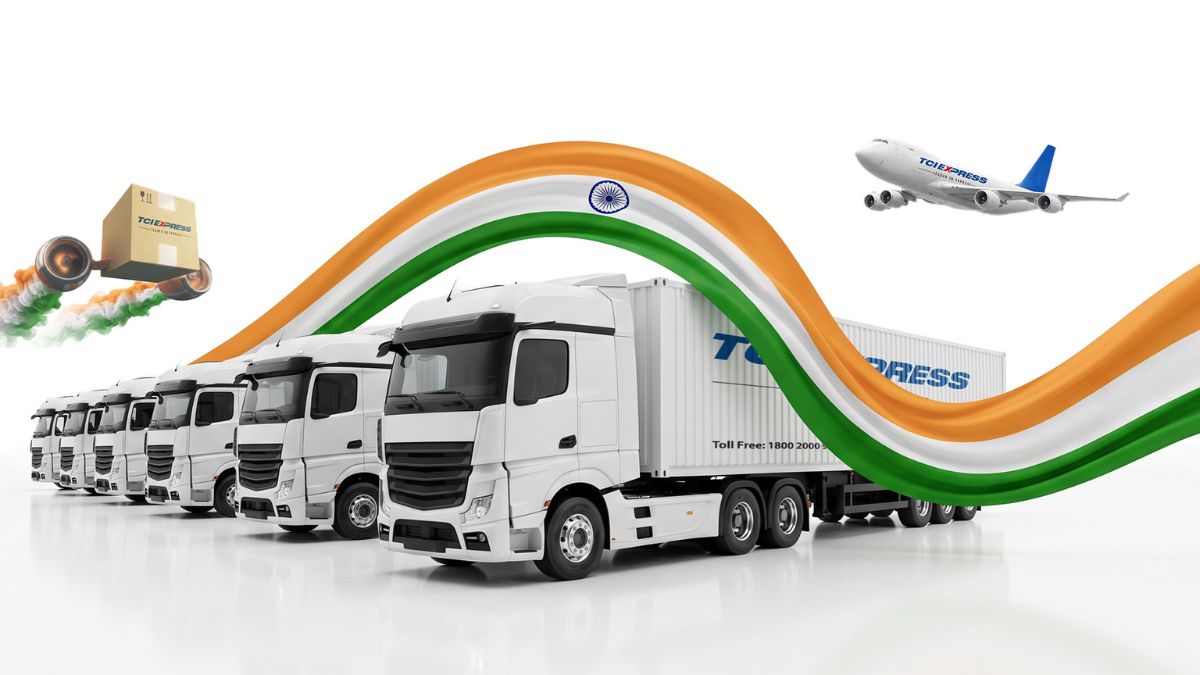
On India’s 80th Independence Day, the road ahead carries the ambition of a nation that continues to build, produce, trade and connect at remarkable scale. Every highway linking an industrial cluster, every freight train carrying essential goods, every airport serving a growing city and every digital shipment update forms part of the India logistics journey.
For TCI EXPRESS, the purpose remains clear: keep businesses connected and moving. Independence Day is a moment to recognise how far India’s transport and logistics ecosystem has travelled—and to consider what must come next.
From national connectivity to economic connectivity
At Independence, connecting India was fundamentally a nation-building task. Roads and railways had to link cities with towns, production centres with markets and communities with essential supplies. As agriculture, manufacturing and trade expanded, transport became part of everyday economic participation.
Today, business supply chains extend across multiple states, draw components from several regions and serve customers who expect timely updates as well as dependable movement. These journeys bring together roads, railways, airports, ports, sorting centres, digital systems and last-mile services.
This change is important. Connectivity is no longer measured only by whether two locations are linked. It is also measured by how reliably goods, data and documents can move between them.
The infrastructure milestones shaping modern logistics
Highways and economic corridors
India’s expanding road network supports flexible door-to-door movement and access to industrial, commercial and consumption centres. Programmes such as Bharatmala have placed greater attention on economic corridors, border and coastal connectivity, feeder routes and the removal of infrastructure gaps.
For express distribution, road connectivity remains essential to first-mile pickup, intercity movement and last-mile delivery. The value of a highway is realised fully when it connects smoothly with branches, warehouses, rail terminals, airports and customer locations.
Dedicated capacity for rail freight
Rail has long supported India’s movement of bulk and long-distance freight. Dedicated Freight Corridors are creating freight capacity that is separated from much of the passenger network. The Economic Survey reported that 2,741 kilometres, or 96.4% of the planned 2,843-kilometre corridor network, had been commissioned by November 2024.
For businesses, rail can support planned long-distance movement and offer a lower-emission alternative on suitable routes. The practical opportunity is not to choose rail for every shipment, but to match the lane, cargo profile and required delivery time with the appropriate mode.
Air connectivity for time-sensitive movement
Regional airport development and improved air connectivity have widened the options available for urgent cargo. Air transport can help businesses protect production, replenish critical inventory or reach distant markets quickly when the commodity and route are suitable.
The full delivery time includes pickup, processing, airport acceptance, flight capacity, destination handling and final delivery—not only the time spent in the air. Reliable air express therefore depends on coordination across the complete journey.
Ports, coastal movement and logistics parks
Sagarmala, port modernisation, improved road and rail links to ports and the development of multimodal logistics parks support India’s domestic and international trade. Integrated terminals can reduce fragmented handling when infrastructure, operating processes and data systems work together.
PM GatiShakti: planning connections as one network
Launched in 2021, the PM GatiShakti National Master Plan introduced a coordinated approach to infrastructure planning. Its geospatial platform brings together data from ministries, departments, states and union territories so that projects can be considered in relation to industrial clusters, logistics assets and other infrastructure.
This matters because a new road, rail terminal or logistics park cannot deliver its full value in isolation. The surrounding first-mile and last-mile connections, utilities, regulatory requirements and economic activity all influence the result.
The launch of PM GatiShakti Public has also widened access to infrastructure and geospatial information through a unified interface. Greater data access can help planners and businesses understand connectivity more clearly, subject to the platform’s permitted use and available datasets.
The National Logistics Policy: improving the operating system
Physical infrastructure is only one part of logistics performance. The National Logistics Policy, launched in 2022, addresses service processes, digital systems, standards, skills, state engagement and regulatory improvement.
The policy’s stated vision is a technologically enabled, integrated, cost-efficient, resilient, sustainable and trusted logistics ecosystem. Its action areas include digital logistics systems, standardisation, human-resource development, state logistics planning, export-import logistics, service improvement and logistics parks.
The distinction between PM GatiShakti and the National Logistics Policy is useful: one supports coordinated infrastructure planning, while the other strengthens the processes and systems through which logistics services operate.
Digital logistics: making movement visible
India’s logistics transformation is increasingly digital. The Unified Logistics Interface Platform connects authorised data from multiple government systems through APIs. According to the Ministry of Commerce and Industry, ULIP had enabled more than 160 crore digital transactions by August 2025. The Logistics Data Bank had tracked more than 75 million export-import containers across 101 Inland Container Depots.
These developments show how data can support visibility and decision-making across a complex logistics ecosystem. At the company and shipment level, useful digitisation includes electronic booking, barcode scans, GPS updates, exception alerts, electronic proof of delivery, billing data and approved ERP integration.
Technology does not move a package by itself. It makes the physical journey easier to plan, monitor and improve when processes and responsibilities are clearly defined.
States as partners in logistics development
Logistics performance varies across locations because infrastructure, industrial activity, geography and administrative processes differ. State logistics policies and the Logistics Ease Across Different States framework help states and union territories assess their ecosystems, identify gaps and prioritise improvements.
LEADS 2025 increased the use of measurable indicators in its assessment framework. This supports a more evidence-based view of infrastructure, services and operating conditions instead of relying only on broad perceptions.
The next chapter: sustainable and inclusive movement
India’s future logistics growth must balance speed, reach, cost and environmental responsibility. Multimodal planning can place suitable long-distance freight on rail or waterways, while cleaner vehicles, renewable energy, efficient facilities and better route planning can reduce resource use.
Green logistics is not achieved through one technology or slogan. It requires decisions about mode, vehicle, energy, packaging, facility design, utilisation and measurement. It must also include people: drivers, handlers, technicians, customer-support teams and logistics professionals need suitable training and safe working conditions.
TCI EXPRESS moving forward with India
TCI EXPRESS has developed its network around the changing needs of Indian business. The company reports a fully containerised fleet of 5,500+ vehicles, service across 50,000+ pickup points and 60,000+ delivery locations, and about 30 strategically located sorting centres. These include high-tech, fully automated facilities at Gurugram and Pune.
Its service portfolio reflects the move towards multimodal and specialised logistics. Businesses can consider Surface Express, Rail Express, Domestic Air Express and International Air Express according to the lane, commodity, urgency and applicable conditions.
TCI EXPRESS also reports GPS-enabled vehicles, automated operations and digital customer tools. Solar installations with a combined capacity of 880 kW at the Gurugram and Pune sorting centres increase the use of renewable electricity, while automation at these facilities has reduced vehicle turnaround time by 40%. The company’s FY 2024-25 disclosures set a target of carbon-neutral operations by 2038.
The next stage of cleaner movement includes greater use of rail on suitable long-distance routes, improved vehicle utilisation, route optimisation and replacement of older fuel-intensive vehicles. A measured transition towards electric commercial vehicles can take this progress further wherever route, charging, payload and service conditions make deployment practical.
A development journey built over decades
- 1996: TCI XPS began as the express-distribution division of Transport Corporation of India, establishing the foundation for a time-definite B2B express network.
- 2016: Following the approved demerger of the XPS division, TCI EXPRESS became an independent listed company. Its shares began trading on the NSE and BSE on 15 December 2016.
- 2019–20: The company moved to 100% electronic dockets across its booking operations and began developing major sorting facilities at Gurugram and Pune.
- 2022–24: Automation at the Gurugram GIGA and Pune sorting centres strengthened sorting capacity and helped reduce turnaround time. Both sites also adopted onsite solar power and received recognised green-building certifications.
- 2024–25: TCI EXPRESS reported 970+ branches, 5,500+ containerised vehicles, 50,000+ pickup points and 60,000+ delivery locations, supported by surface, rail, domestic air, international air, C2C, e-commerce and temperature-controlled service capabilities.
Connecting Indian businesses with every corner of the world
- Stronger first-mile links from Indian manufacturing clusters and smaller cities to international gateways
- Reliable connections between surface, rail and air networks for domestic and cross-border shipments
- Single-window support for international documentation and clearance coordination, subject to customs, airline and destination-country requirements
- Secure, timely data exchange among customers, logistics providers, customs systems and overseas delivery partners
- Clear end-to-end shipment visibility, including international milestones, exceptions and proof of delivery
- Cleaner facilities and vehicles, better capacity utilisation and measurable progress towards carbon-neutral operations
- Consistent customer support that makes international shipping easier from booking through final delivery
The next decade should make logistics simpler for the customer while improving its environmental performance. That means a practical shift towards electric fleets, sustainable action from first mile to last mile, more reliable data exchange and a transparent pathway towards carbon-neutral operations. For international shipments, coordinated single-window support can help customers manage serviceability, documentation and clearance requirements through one accountable contact. Technology, infrastructure and sustainability create the greatest value when they reduce uncertainty and make every domestic or international journey easier to plan, track and complete.
Countless journeys forward
India’s logistics journey reflects the country itself: diverse, ambitious and always moving. The roads, rails, airports, ports, digital platforms and people behind them connect factories with markets, small towns with national supply chains and Indian businesses with the world.
On this Independence Day, TCI EXPRESS salutes everyone who keeps those connections working. The journey ahead calls for the same purpose that has carried the nation this far—building stronger links, widening opportunity and moving forward together.
Wishing everyone a very Happy Independence Day.
Frequently Asked Questions
How has logistics developed in India?
India’s logistics ecosystem has progressed through expanded road, rail, airport and port infrastructure, multimodal planning, dedicated freight capacity, digital platforms and policy reforms.
What is the National Logistics Policy?
Launched in 2022, the policy aims to develop a technologically enabled, integrated, resilient, sustainable and trusted logistics ecosystem through digital, regulatory, skills and service reforms.
What is PM GatiShakti?
PM GatiShakti is a national master plan that uses coordinated geospatial data to support integrated planning of multimodal infrastructure and economic connectivity.
What is ULIP in logistics?
The Unified Logistics Interface Platform is a digital integration layer that enables authorised data exchange between logistics-related government systems and approved applications.
Why are Dedicated Freight Corridors important?
They create dedicated rail capacity for freight, supporting higher volumes and reducing dependence on railway paths shared with passenger services.
How does multimodal logistics support Indian businesses?
It allows businesses to assess surface, rail, air or other modes according to the lane, cargo, urgency, capacity, cost and sustainability requirement.
References & Sources
- TCI EXPRESS — official Independence Day campaign post ↗
- Press Information Bureau — National Logistics Policy third-anniversary progress ↗
- Press Information Bureau — National Logistics Policy launch ↗
- Press Information Bureau — PM GatiShakti Public platform ↗
- Press Information Bureau — sustainable logistics initiatives ↗
- Government of India Economic Survey 2024-25 — Investment and Infrastructure ↗
- TCI EXPRESS — About and Infrastructure ↗
- Ministry of Road Transport and Highways — Bharatmala Pariyojana ↗
- Digital India — PM GatiShakti ↗
- TCI EXPRESS — Investor FAQs and corporate history ↗
- TCI EXPRESS — Annual Report 2016–17 ↗
- TCI EXPRESS — Annual Report 2019–20 ↗
- TCI EXPRESS — Annual Report 2024–25 ↗
- TCI EXPRESS — Solar energy ↗
- TCI EXPRESS — Automated sorting centres ↗