World Nature Conservation Day: Building Resilient, Low-Carbon Supply Chains at TCI EXPRESS
Key Takeaway
On World Nature Conservation Day, explore how TCI EXPRESS integrates EV fleets, solar hub energy, and eco-packaging to build low-carbon B2B supply chains.
Introduction: Environmental Stewardship in High-Speed Freight
In modern industrial distribution, speed and environmental conservation are often viewed as opposing priorities. Traditional logistics models frequently associate faster transit times with higher fuel consumption, increased packaging waste, and greater carbon emissions.
However, as global businesses adapt to mandatory environmental standards, carbon audits, and ESG compliance guidelines, this traditional view is no longer viable. Today’s corporate leaders demand a logistics framework that delivers both rapid execution and environmental responsibility.
Two decades of managing enterprise logistics show that sustainable freight distribution does not require sacrificing delivery speed or operational reliability. On World Nature Conservation Day, true progress means moving forward carefully-choosing practical operational measures that ease the load on the environment without slowing down supply chain execution.
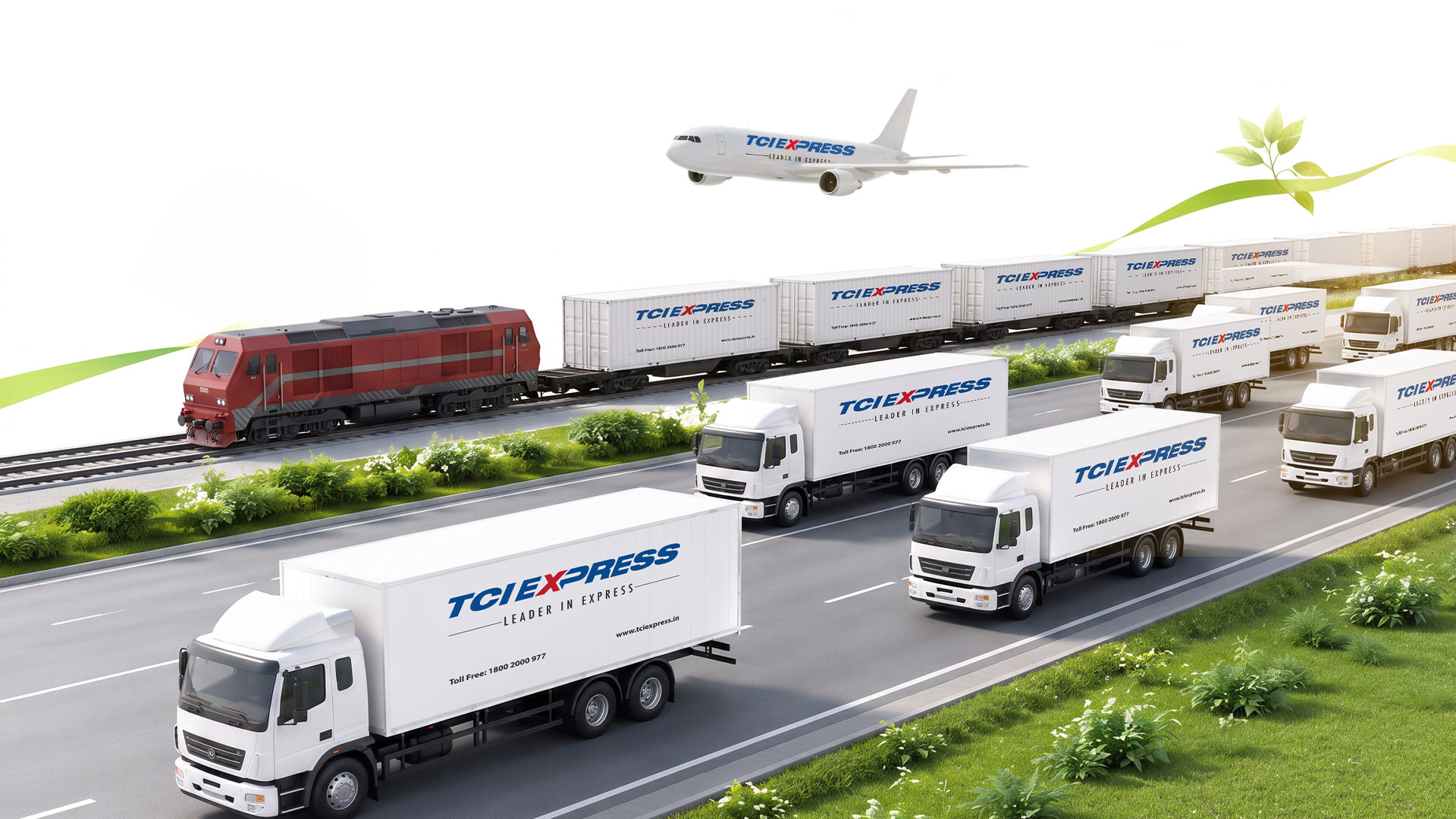
At TCI EXPRESS, we carry this commitment into every action we take, building a greener tomorrow through solar-powered hubs, electric vehicle fleets, sustainable packaging materials, and optimized route networks.
1. Sustainable Packaging: Reducing Weight, Volume, and Waste
Packaging represents one of the most immediate opportunities to practice environmental conservation across commercial distribution networks. In B2B express shipping, inefficient packaging creates dual problems: unnecessary material waste and inflated freight volume.
Implementing sustainable packaging strategies delivers major environmental and operational benefits:
- Modular Dimensioning: Custom-fitting package sizes to exact product dimensions eliminates excess air space, allowing more packages to fit inside each container vehicle.
- Replacing Single-Use Plastics: Transitioning from non-recyclable plastic wraps to high-strength, biodegradable paperboard and recyclable corrugated boxes.
- Weight Optimization: Utilizing lightweight, high-tensile materials reduces total shipment weight, directly lowering fuel consumption per ton-kilometer.
- Digital Paperless Documentation: Replacing physical paper dockets and invoices with digital manifests reduces paper consumption across thousands of daily dispatches.
[ Optimized Eco-Packaging ] --? [ Reduced Freight Volume ] --? [ Higher Vehicle Capacity ] --? [ Lower Carbon Output ]
2. Solar-Powered Facilities & Renewable Energy Generation
Sorting centers and distribution hubs are energy-intensive facilities. Operating high-speed automated sorting conveyors, barcode scanning systems, hydraulic ramps, and climate control requires continuous electrical power.
Transitioning sorting hubs into clean energy centers is a key element of sustainable logistics:
- Rooftop Solar Installations: Generating clean solar energy on-site reduces reliance on fossil-fuel-powered municipal electrical grids.
- Energy-Efficient LED & HVAC Infrastructure: Upgrading facility lighting to smart LED sensors and high-efficiency climate systems lowers overall energy consumption.
- Battery Energy Storage Systems (BESS): Storing excess daytime solar power ensures clean energy availability during night-shift sorting operations.
3. Route Optimization and Load Consolidation
Every unnecessary kilometer driven by a commercial freight vehicle contributes directly to greenhouse gas emissions and vehicle wear. Optimizing delivery routes is one of the most effective ways to lower carbon output while maintaining time-definite delivery schedules.
AI-Driven Route Planning
Utilizing advanced route optimization software, dispatch managers map the most efficient delivery paths, taking into account real-time traffic patterns, road conditions, and delivery windows to avoid unnecessary idling and miles driven.
Eliminating Empty Miles Through Full Truckload Efficiency
For enterprise manufacturers requiring large-scale movements between production plants and regional fulfillment centers, C2C Express provides full-truckload (FTL) and milk-run routing designed for maximum vehicle capacity utilization, eliminating empty return trips.
4. Multimodal Decarbonization: Integrating Rail Express and EV Fleets
A comprehensive environmental conservation strategy requires combining low-emission transport modes across long-haul and last-mile distribution networks.
[ Factory Floor ] --? [ Commercial EV Feeder ] --? [ Dedicated Rail Express ] --? [ EV Last-Mile ] --? [ Doorstep ]
High-Volume Rail Freight Integration
Moving freight by rail generates up to 75% fewer carbon emissions per ton-kilometer compared to long-haul highway trucking. Utilizing dedicated freight corridors and scheduled rail wagons, Rail Express provides eco-friendly bulk transport connected seamlessly to local road fleets.
Electric Vehicle (EV) Last-Mile Distribution
Urban last-mile deliveries encounter heavy traffic and frequent stop-and-start cycles. Deploying commercial electric vehicles (EVs) eliminates urban tailpipe emissions, reduces noise pollution, and insulates operations from fuel price volatility.
Pan-India Ground Express Capabilities
For regional freight movements across highway networks, Surface Express operates containerized, GPS-monitored vehicles serving more than 40,000 locations nationwide with day-definite transit schedules.
Urgent Air Express Cargo Channels
When extreme transit speed is essential for critical automotive components, electronics, or medical supplies, Domestic Air Express delivers 24-hour turnaround across major metros and 48 hours for secondary industrial cities.
Cross-Border Global Distribution
For enterprises expanding into international markets, specialized International Air Express routes connect 208 countries worldwide, backed by automated customs processing and global tracking.
5. Specialized Vertical Solutions: Healthcare and E-Commerce Conservation
Different commercial sectors require tailored green handling protocols to protect product integrity while supporting environmental goals.
Temperature-Controlled Cold Chain Operations
Biopharmaceuticals, vaccines, and diagnostic reagents demand precise temperature control throughout transit. Utilizing climate-controlled, sensor-monitored vehicles and energy-efficient thermal insulation, Cold Chain Express maintains thermal stability across parcel and full truckload shipments.
E-Commerce & Green Last-Mile Delivery
Rapid e-commerce expansion requires sustainable urban fulfillment solutions. Specialized E-Commerce Express offerings empower online brands with fast order dispatches, cash-on-delivery (COD) processing, and eco-friendly return logistics.
6. Contractual Guarantees, Digital Control, and Enterprise ESG Performance
Practicing environmental conservation must reinforce-never compromise-service reliability. Enterprise shippers need complete operational transparency and binding service commitments.
Contractual Delivery Commitments
Sustainable practices must be backed by true operational accountability. Services supported by a formal Money Back Guarantee (MBG) offer enterprise shippers financial assurance that time-bound deliveries arrive on schedule.
Digital Transparency & Self-Service Tools
Enterprise logistics managers benefit from real-time shipment tracking and digital booking platforms:
- Live Status Monitoring: Monitor shipment status across all transit modes using real-time shipment tracking.
- Freight Cost Estimator: Calculate shipping budgets in advance with the online freight cost estimate calculator.
- Instant Pickup Booking: Schedule doorstep cargo pickup effortlessly via the schedule a pickup request portal.
- Branch Locator Network: Identify local service hubs using the extensive branch locator network.
- Pincode Reach Checker: Verify service access for remote locations via the pincode accessibility checker.
- Centralized Account Portal: Access digital dockets, invoices, and shipping analytics through the MyExpress customer portal.
7. The Future of Conservation in Logistics: Building a Greener Tomorrow
Environmental conservation in commercial express logistics is an ongoing operational commitment. By investing continuously in solar sorting infrastructure, expanding commercial EV fleets, deploying eco-friendly packaging, and leveraging rail freight, logistics providers build resilient supply chains that protect the environment while supporting economic growth.
By partnering with an express logistics leader committed to practical environmental stewardship, enterprise shippers lower their Scope 3 carbon footprint, meet ESG reporting requirements, and contribute to a cleaner, healthier future.
+---------------------------------------------------------+
¦ PRACTICAL CONSERVATION IN B2B EXPRESS LOGISTICS ¦
+---------------------------------------------------------+
¦
+-------------------------------------------------+
? ?
+----------------------+ +----------------------+
¦ GREEN PRACTICES ¦ ¦ OPERATIONAL SPEED ¦
¦ - Eco-Packaging ¦ ¦ - Time-Definite SLAs¦
¦ - Solar Sorting Hubs¦ ¦ - Live Tracking ¦
¦ - Rail + EV Networks¦ ¦ - Guaranteed MBG ¦
+----------------------+ +----------------------+
¦ ¦
+-------------------------------------------------+
?
+---------------------------------------------------------+
¦ LOWER SCOPE 3 EMISSIONS & SUSTAINABLE ENTERPRISE GROWTH¦
+---------------------------------------------------------+
Conclusion: Partnering for a Greener Tomorrow
On World Nature Conservation Day and every day, environmental progress relies on practical action. By choosing an express logistics partner that moves carefully-combining green technology, renewable energy, and multimodal networks-businesses can protect nature while maintaining high-performing supply chains.
At TCI EXPRESS, we remain committed to building a sustainable future-delivering for your business and for the planet.
Ready to Build a Sustainable Enterprise Supply Chain?
Partner with India's leader in eco-friendly express logistics:
- Schedule a Pickup Request online in seconds.
- Calculate shipping costs instantly with our Freight Cost Estimate Calculator.
- Locate your nearest service hub using our Branch Locator.
Frequently Asked Questions
What is the significance of World Nature Conservation Day in supply chain management?
It serves as a reminder for logistics providers and corporate shippers to adopt sustainable practices, reduce carbon emissions, and conserve natural resources.
What green initiatives has TCI EXPRESS implemented across its sorting centers?
Key initiatives include rooftop solar power generation, energy-efficient LED lighting, rainwater harvesting, and paperless digital docket processing.
How can businesses transition toward sustainable freight shipping?
By choosing logistics partners that utilize electric fleets, eco-friendly packaging materials, and AI route optimization software to minimize transit fuel consumption.