Happy Vishwakarma Puja: Celebrating Craftsmanship, Precision and Progress
Key Takeaway
- Honoring the Divine Architect & Everyday Makers: Vishwakarma Puja celebrates craftsmanship, engineering excellence, and the dedication of the technicians, drivers, warehouse crews, and logistics specialists who build and move India.
- Craftsmanship in Modern Logistics: True supply chain craftsmanship is defined by precision at every step—accurate dimension capture, proper protective packaging, disciplined vehicle inspections, and seamless handovers.
- Respect for Tools Means Safety First: Beyond festive traditions, honoring equipment means rigorous preventive maintenance, adherence to safety protocols, and ensuring zero compromise on workplace well-being.
- Technology Guided by Human Judgment: Advanced automated sorting hubs (like Gurugram and Pune) and digital tracking empower our teams, but it is human care and integrity that turn speed into dependable customer trust.
Happy Vishwakarma Puja! On this auspicious occasion, TCI EXPRESS celebrates the spirit of craftsmanship, precision and purposeful progress. The festival honours Lord Vishwakarma, traditionally revered as the divine architect, and recognises the skill, dedication and creativity of the people whose work helps build and move the nation.
For manufacturers, engineers, technicians, artisans, drivers, equipment operators, warehouse teams and logistics professionals, Vishwakarma Puja carries a special meaning. It reminds us that progress is created through careful work. Every tool must be respected, every process understood and every responsibility handled with attention.
TCI EXPRESS wishes its customers, employees, associates, partners and their families a blessed and prosperous Vishwakarma Puja. May the occasion bring safety, growth, new opportunities and continuous progress to every business.
What does Vishwakarma Puja represent?
The Government of India's Utsav portal describes Vishwakarma as the divine engineer and architect of the universe. The occasion is observed by craftspeople, engineers, industrial workers and professionals who honour the tools, machines and skills used in their work.
The Indira Gandhi National Centre for the Arts also documents the connection between Vishwakarma traditions and artisan communities such as ironsmiths, carpenters, coppersmiths, sculptors and goldsmiths. These traditions recognise that knowledge and skill are carried forward through practice, discipline and respect for the craft.
In a modern workplace, the same values remain relevant. The tools may now include automated sorters, scanners, software, vehicles, material-handling equipment and digital platforms, but their value still depends on the people who use them thoughtfully and safely.
Craftsmanship is not limited to making physical objects
Craftsmanship is often associated with an artisan shaping a material by hand. Its deeper meaning is the commitment to perform work with care, knowledge and consistency. A well-built product, a correctly maintained machine, an accurately prepared document and a responsibly completed delivery all reflect craftsmanship.
In logistics, craftsmanship appears in many everyday actions:
- A packer selecting protection suited to the product
- A warehouse employee checking the package count and label
- A vehicle operator completing a safety inspection
- A sorter identifying the correct onward destination
- A planner matching the cargo with a suitable route and service
- A technology team keeping shipment information available
- A customer-service representative explaining an exception clearly
- A delivery professional completing an authorised handover
Each action may appear small when viewed alone. Together, they shape the customer's complete experience.
Why precision matters in a supply chain
A supply chain connects many independent decisions. A shipment may begin at a factory, move through pickup and sorting, travel by surface, air or rail, reach a destination facility and then move to the final recipient. An error at one stage can affect every stage that follows.
Precision begins with accurate information:
- Correct origin and destination addresses
- Complete consignee contact details
- Accurate commodity description
- Correct package count, dimensions and weight
- Suitable service and delivery requirement
- Readable labels and matching shipment references
- Applicable invoice and transport documents
- Clear loading, unloading and handling instructions
Precision does not mean that unexpected events will never occur. Weather, congestion, capacity, mechanical problems or recipient availability can affect a journey. Precision means that teams work from reliable information, detect differences early and respond through an agreed process.
Respect for tools begins with safe use
Vishwakarma Puja is closely associated with tools, machines and workplaces. Respecting a tool means more than decorating it for the festival. It also means using it for its intended purpose, maintaining it properly and never bypassing safety controls for convenience or speed.
A safe logistics workplace may include:
- Pre-use inspection of vehicles and material-handling equipment
- Clear walking and operating zones
- Correct lifting and loading practices
- Use of suitable protective equipment
- Speed and access controls inside facilities
- Emergency procedures understood by the team
- Immediate reporting of damage, leakage or unsafe conditions
- Preventive maintenance completed according to the approved schedule
Production and delivery targets should never encourage unsafe behaviour. A delay can be reviewed and corrected. A preventable injury can have lasting consequences for a person and family.
People give technology its purpose
Modern logistics uses automation and digital systems to process information and move growing shipment volumes. Technology can support speed, identification, routing and visibility, but it does not remove the importance of human judgement.
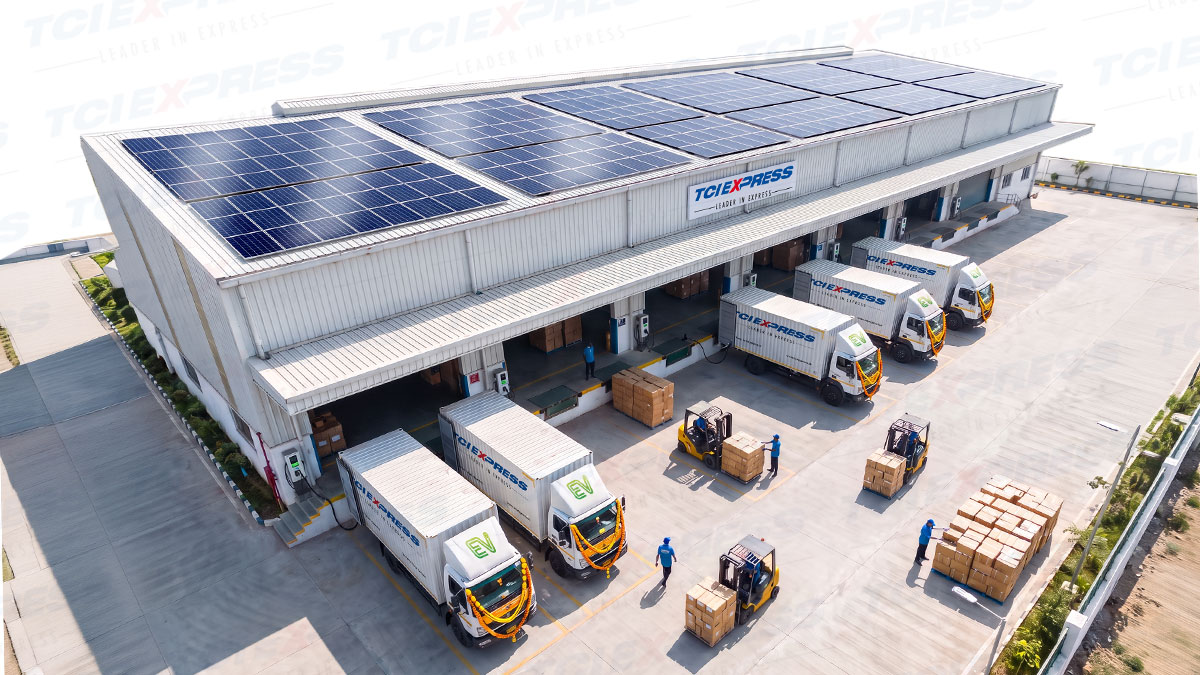
The TCI EXPRESS infrastructure overview describes automated sorting centres, GPS-enabled movement, containerised vehicles and a hub-and-spoke network. The company's FY 2024–25 annual report explains that its Gurugram and Pune facilities use automated sorting technology to support parcel identification and movement.
The benefit of automation still begins with human preparation. A barcode must be correct and readable. Shipment data must match the physical package. Equipment must be monitored and maintained. An exception must reach a person authorised to decide what happens next.
Technology performs best when it strengthens skilled work rather than being treated as a substitute for responsibility.
Continuous improvement is a form of craftsmanship
A skilled craftsperson learns from each completed task. In the same way, an effective logistics team reviews results and improves the process.
Continuous improvement can begin with simple questions:
- Which errors occurred more than once?
- Where did a shipment wait longer than planned?
- Which information was missing at pickup?
- Could packaging have been clearer or stronger?
- Were the correct people informed during an exception?
- Did the selected service fit the actual requirement?
- What should be standardised before the next dispatch?
Improvement is not limited to a major investment. A clearer label position, a better staging layout, a revised checklist or an earlier customer confirmation can prevent repeated effort and make work safer.
From the factory floor to the market
Craftsmanship creates value at the factory, workshop, construction site and service centre. Logistics carries that value towards the next business or customer. If the movement is poorly planned, careful production can be undermined by incorrect packaging, missing documents, unnecessary handling or an unavailable recipient.
A reliable factory-to-market plan should connect:
- Production readiness: the correct goods are complete and approved for dispatch.
- Packaging readiness: the shipment is protected and labelled for the complete journey.
- Document readiness: booking, invoice and applicable transport records are aligned.
- Pickup readiness: packages, loading access and responsible people are available.
- Network movement: the selected service and route fit the cargo and delivery requirement.
- Receiving readiness: the authorised recipient can accept and unload the shipment.
- Closure: delivery evidence and business records are reconciled.
This sequence turns movement into a controlled business process.
Different business needs require different services
No single transport mode is suitable for every shipment. Precision also means choosing the service after understanding the business requirement.
- Surface Express: may support planned B2B distribution where the available road network and schedule fit the shipment.
- Domestic Air Express: may be assessed for accepted urgent cargo when the business cost of delay supports air movement.
- Rail Express: may suit selected long-distance lanes where the rail connection, handling and final-delivery plan are practical.
- C2C Express: can be evaluated for suitable dedicated movement requirements.
Businesses can review the complete TCI EXPRESS service portfolio. The final choice depends on origin, destination, commodity, dimensions, urgency, documentation, capacity and the selected service terms.
Sustainable progress requires thoughtful design
Vishwakarma Puja celebrates creation, but meaningful progress must also consider how resources are used. Efficient design can reduce unnecessary energy, paper, handling and movement.
The TCI EXPRESS FY 2024–25 annual report states that its automated facilities at Gurugram and Pune use solar power, LED lighting and waste-management practices and have achieved LEED Gold certification. It also describes digital workflows, smart routing and energy-efficient equipment as parts of the company's sustainability approach.
These initiatives show how infrastructure, technology and environmental responsibility can support one another. However, sustainability is not created by one facility or certificate alone. It requires continued measurement, maintenance and improvement across operations.
Prosperity grows through dependable partnerships
Business progress rarely comes from one organisation acting alone. Manufacturers depend on suppliers, employees, service providers, distributors, customers and communities. Logistics connects many of these relationships.
A dependable partnership is built when both parties prepare responsibly:
- The customer shares accurate shipment and forecast information
- The provider confirms serviceability and operating conditions
- Both sides agree on cut-offs, contacts and responsibilities
- Documents and physical packages are reconciled at handover
- Tracking milestones have a common meaning
- Exceptions are escalated and closed transparently
- Performance is reviewed using agreed measures
Prosperity becomes more sustainable when growth is supported by clear systems, mutual trust and respect for every person contributing to the outcome.
Honouring the people behind every movement
Every completed delivery is supported by people whose work may not always be visible. Drivers, loaders, sorters, mechanics, security personnel, facility teams, customer-service representatives, planners and technology professionals all contribute to the movement.
Vishwakarma Puja gives organisations an opportunity to recognise that effort. Appreciation should extend beyond a greeting. It can be reflected through safe workplaces, training, fair treatment, reliable equipment and respect for professional knowledge.
An operational perspective: Craftsmanship and safety on the sorting floor
Across TCI EXPRESS's operational network—encompassing more than 1,000 branch touchpoints and advanced sorting centres in Gurugram and Pune—hub operations leaders view craftsmanship not as an abstract ideal, but as a disciplined daily routine. At the automated hub level, where high-speed cross-belt conveyors and optical dimension scanners process up to 15,000 packages per hour, operational precision begins well before the conveyor belts power on.
Every shift opens with a structured safety inspection: verifying mechanical roller alignment, testing emergency stop controls, calibrating automated weigh-scan sensors, and conducting multi-point pre-trip checklists on containerised line-haul vehicles. Operations supervisors frequently remind teams that respect for machinery is directly reflected in preventive care. Bypassing a checklist to save five minutes compromises safety and reliability downstream. By contrast, adhering to strict material-handling standards, ensuring correct package orientation, and maintaining spotless loading zones are the real hallmarks of craftsmanship in express distribution.
This operational culture extends from the loading dock to the final mile. As frontline teams celebrate Vishwakarma Puja across regional facilities, the ritual honours both the cutting-edge automation that accelerates parcel throughput and the skilled workforce whose vigilance prevents damage, minimizes dwell time, and ensures that every customer consignment moves safely toward its destination.
A Vishwakarma Puja reflection for businesses
The occasion can also be a useful moment for a business to pause and review its own operations.
- Are tools and machines being maintained before they fail?
- Do employees have the training needed for their responsibilities?
- Are safety concerns easy to report?
- Is important operational knowledge being passed to newer colleagues?
- Are digital systems making work clearer or only adding more data?
- Do customers receive accurate and understandable information?
- Are growth and sustainability considered together?
These questions connect the festival's message with practical progress. They recognise that excellence is not achieved once. It is maintained through discipline and renewed through learning.
Moving forward with precision and purpose
Craftsmanship gives work quality. Precision gives it consistency. Safety protects the people who perform it. Technology increases capability. Continuous improvement helps the organisation move forward.
For TCI EXPRESS, these ideas meet in the everyday responsibility of moving business shipments across the network. A delivery begins with customer information, passes through people and systems and ends with an authorised handover. Every stage deserves attention.
On Vishwakarma Puja, TCI EXPRESS celebrates the people, skills, tools and ideas that support national progress. May the occasion inspire responsible creation, safe work, stronger partnerships and lasting prosperity.
Key Takeaways for Sustainable Progress:
- Skill Over Speed: In high-velocity logistics, disciplined execution and proper packaging protect value far better than rushed, unverified movement.
- Safety as a Core Duty: Respecting tools, vehicles, and automation begins with routine maintenance, ergonomic practices, and safe facility operations.
- Empowering the Workforce: World-class infrastructure succeeds only when supported by continuous training, fair recognition, and genuine respect for frontline workers.
- Building Dependable Futures: Merging technological automation with ethical craftsmanship creates supply chains that are resilient, sustainable, and trusted.
Wishing you and your family a blessed, safe and prosperous Vishwakarma Puja.

Frequently Asked Questions
What is Vishwakarma Puja?
Vishwakarma Puja honours Lord Vishwakarma, traditionally revered as the divine architect and engineer. The occasion is observed by craftspeople, engineers, workers and industrial organisations across India.
Why is Vishwakarma Puja important in industrial workplaces?
It recognises the value of tools, machines, professional skill and disciplined work. It also provides an opportunity to appreciate the people who operate and maintain essential systems.
How is craftsmanship connected with logistics?
Logistics craftsmanship appears in accurate planning, suitable packaging, safe loading, correct sorting, responsible transport, clear communication and authorised delivery.
Why does precision matter in B2B logistics?
Shipment data, labels, documents and physical packages must align. A small error at the beginning can affect sorting, routing, delivery and customer records later in the journey.
How does technology support precision at TCI EXPRESS?
TCI EXPRESS reports automated sorting, digital scanning, GPS-enabled movement and customer tracking tools. These capabilities support visibility and processing when combined with accurate data and responsible human oversight.
How can businesses celebrate the spirit of Vishwakarma Puja?
Businesses can recognise skilled work, review safety and maintenance, improve training, respect tools and equipment and renew their commitment to quality and responsible progress.