TCI EXPRESS Blood Donation Drive 2026: A Small Act, A Lasting Difference
Key Takeaway
- Voluntary Blood Donation Saves Lives: Blood cannot be manufactured; a single donation can be separated into red cells, platelets, and plasma to help multiple patients in trauma, surgery, and critical medical care.
- Carrying Forward a Founder's Legacy: The 2026 drive honours Late Shri P. D. Agarwal Ji’s enduring vision of uniting enterprise leadership with heartfelt social responsibility and public healthcare service.
- Quick, Safe & Supervised: The entire donation journey—registration, confidential medical screening, collection, and recovery—takes approximately 30 minutes under the care of certified doctors.
- Ways to Support Beyond Donating: Even if deferred or unable to donate, employees and community members can actively champion the drive by volunteering at helpdesks and spreading verified awareness.
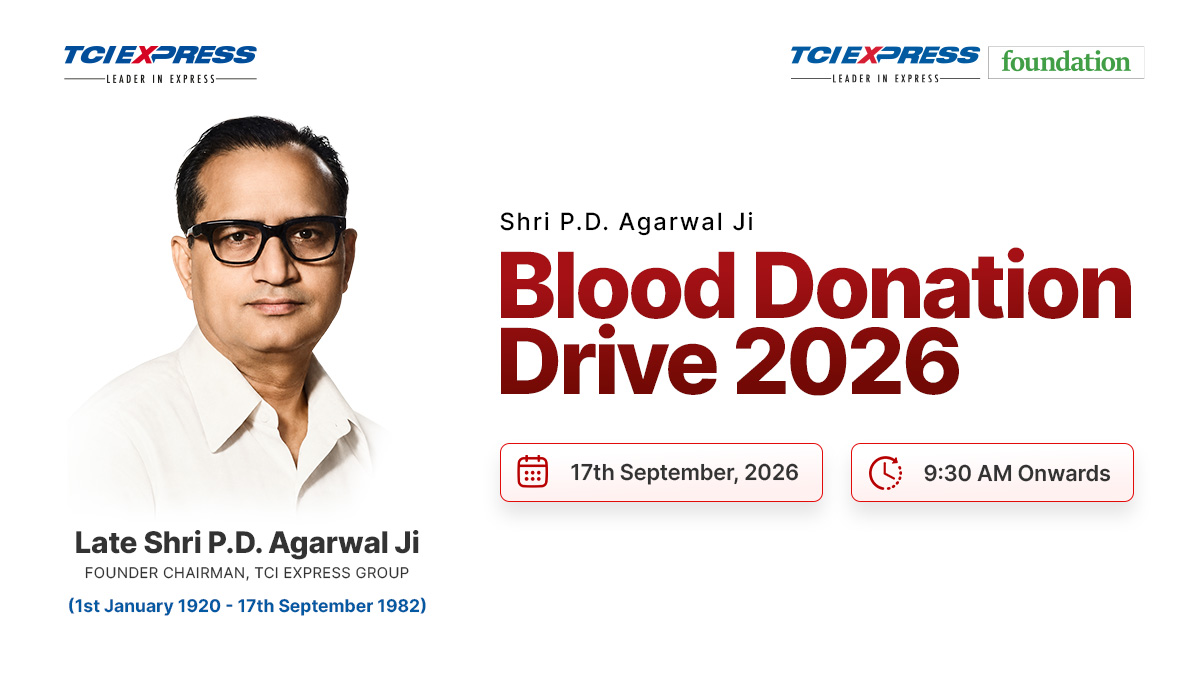
The TCI EXPRESS Blood Donation Drive 2026 invites people to take part in a simple act of service that can support patients and families during moments of urgent medical need. The initiative is being held in remembrance of TCI's Founder Chairman, Late Shri P. D. Agarwal Ji, whose legacy connected enterprise with compassion, responsibility and service to society.
A donor may never meet the person who receives the donated blood. Yet that anonymous connection can matter deeply. Blood and its components are used in emergency care, surgery, treatment for serious illnesses, childbirth-related complications and other clinical situations. Behind every request is a person hoping to recover and return to the people who care for them.
The message of the 2026 campaign is therefore direct and meaningful: Donate Blood. Save a Life.
Why does voluntary blood donation matter?
Blood is a critical medical resource, but it cannot be manufactured like an ordinary product. Hospitals and authorised blood centres depend on eligible voluntary donors to help maintain a safe and adequate supply. The need does not end after one campaign or one emergency. Different patients may require different blood groups or blood components, and available stock changes as blood is collected, tested, processed, issued and reaches the end of its permitted storage period.
The Government of India's Directorate General of Health Services estimates the country's annual blood requirement at 14.6 million units. Its Blood Transfusion Services information also explains the national framework for safe collection and screening. This highlights why regular, organised and voluntary participation remains important.
A donation can be separated by an authorised blood centre into components such as red cells, plasma and platelets. According to the Ministry of Health and Family Welfare's e-RaktKosh information, one donated unit may support multiple patients depending on the components prepared and their clinical use. The medical team decides how donated blood is tested, processed and used.
A tribute to the vision of Late Shri P. D. Agarwal Ji
The Blood Donation Drive 2026 is more than a one-day community activity. It continues a legacy associated with Late Shri P. D. Agarwal Ji and the belief that institutions should contribute to the well-being of the communities around them.
The TCI Foundation blood-donation programme describes Shri P. D. Agarwal Ji's vision of making blood support more accessible and reaching people during critical situations. The Foundation has continued this work as part of a broader commitment to healthcare and community development.
Remembering a founder is most meaningful when values are carried forward through action. By volunteering, sharing verified information or encouraging an eligible colleague to participate, people help turn the ideals of compassion and social responsibility into something practical.
Continuing a nationwide tradition of participation
TCI EXPRESS has supported blood-donation initiatives in previous years. The company's FY 2024–25 Annual Report states that 1,334 people donated blood across India during the Shri P. D. Agarwal Blood Donation Drive 2024, organised collectively by TCI EXPRESS Foundation and TCI Foundation.
That figure represents individual decisions to participate. It also shows how a shared cause can bring together employees, associates, partners and community members across locations. The purpose of referring to the earlier drive is not to set a competition or guarantee a result for 2026. It is to recognise the continuity of the initiative and the human effort behind it.
The wider TCI campaign for 2026 is publicly described as taking place from 14 to 20 September. Participants should rely on the final TCI EXPRESS communication for the exact venue, date, reporting time, registration process and local organiser applicable to them.
Event schedule, locations and participation details
The TCI EXPRESS Blood Donation Drive 2026 takes place during the nationwide commemorative week from 14 to 20 September 2026. Donation camps are being hosted across designated TCI EXPRESS corporate offices, regional hubs, and participating operational centres nationwide in close coordination with TCI Foundation and government-certified local blood centres.
Key event and participation parameters include:
- Drive Window: 14 September to 20 September 2026, with camp hours generally running from 9:30 a.m. to 4:30 p.m. at scheduled locations.
- Participating Locations: Corporate headquarters (Gurugram), major sorting hubs (including Pune and Gurugram centres), and designated zonal branches across key commercial hubs in India.
- Organising Partners: Organised under the stewardship of TCI Foundation in formal collaboration with regional Red Cross units and authorised government-approved blood transfusion centres.
- Registration & Participation: Employees, associates, business partners, and community members can register at the designated on-site helpdesks upon arrival or coordinate through their regional HR and CSR administration teams. Prospective donors are requested to carry a government-issued photo identity card (such as Aadhaar, Voter ID, or Driving Licence).
Participants are encouraged to consult their regional event coordinator or official company notice board for the exact day and timing of the camp at their nearest branch.
Who can donate blood?
Eligibility must be decided by the medical professionals conducting the drive. People should not approve or reject themselves only from a blog article. Health history, medicines, recent illness, travel, medical procedures and other factors may affect whether someone can donate safely on a particular day.
The Government of India's e-RaktKosh donor guidance says that donors generally need to be healthy, at least 18 years old and at least 45 kilograms in weight. It describes healthy donors as generally falling within the age range of 18 to 65 years. These are general public guidelines; the authorised medical officer applies the current standards and makes the final decision after screening.
A person should inform the medical team honestly about:
- Current or recent illness, fever or infection
- Medicines and ongoing treatment
- Past medical procedures or hospitalisation
- Previous donation and any earlier reaction
- Pregnancy, recent delivery or other relevant health conditions
- Recent travel and any other information requested during screening
Screening protects both the donor and the eventual recipient. If a person is asked to postpone donation, that decision should be respected. Deferral does not reduce the value of the person's willingness to help.
What happens during a blood-donation drive?
An organised drive is conducted with an authorised blood centre and trained personnel. The exact process may vary, but it generally includes the following stages.
1. Registration
The prospective donor provides the required identification and contact information and completes the donor form. Personal and medical information should be handled through the authorised process.
2. Confidential health screening
A trained professional asks questions about health, lifestyle and factors that may affect eligibility. e-RaktKosh states that this information is confidential. Basic checks may include pulse, temperature, blood pressure and haemoglobin assessment under the applicable process.
3. Medical eligibility decision
The authorised medical professional reviews the available information and decides whether the person is eligible to donate on that day. Organisers and workplace managers should never pressure someone to participate or question a confidential medical deferral.
4. Donation
If the donor is eligible and gives consent, trained personnel collect the blood using the authorised equipment and procedure. The donor should follow the instructions given by the medical team throughout the process.
5. Rest and refreshments
After donation, the donor rests for the recommended period and follows the medical team's instructions. Any discomfort or concern should be reported immediately to the professionals present.
How should someone prepare for the drive?
Participants should follow the instructions issued by the authorised blood centre. General preparation can include:
- Reviewing the official event notice and registration requirements
- Carrying the identification requested by the organisers
- Getting adequate rest before attending
- Eating normally and avoiding donation while fasting
- Drinking sufficient non-alcoholic fluids
- Wearing clothing that allows comfortable access to the arm
- Sharing complete and truthful health information during screening
- Keeping enough time for registration, screening, donation and recovery
Government standards state that a donor should not be fasting at the time of donation. Individual medical advice and the instructions of the authorised team take priority over general suggestions in this article.
What should donors do after donating?
Donors should remain at the site for the advised recovery period and follow the instructions provided by the medical professionals. They may be asked to have refreshments, drink fluids and avoid certain strenuous activities for a period after donation.
People whose work involves driving over long distances, operating machinery, working at height, emergency response or other strenuous duties should tell the medical team about their occupation and next shift. The authorised professionals can provide the appropriate advice. If a donor later feels unwell or has a concern, the donor should contact the blood centre or seek medical help using the information provided at the drive.
How can first-time donors feel more confident?
It is natural to have questions before donating for the first time. Reliable information and a respectful process can reduce uncertainty.
- Ask the authorised team to explain the process before giving consent.
- Tell the staff if you feel anxious, uncomfortable or have fainted during a previous medical procedure.
- Do not hide health information because you want to be accepted.
- Attend with a colleague or friend if the event arrangements allow it.
- Remember that volunteering does not remove your right to ask questions or withdraw consent before donation.
The campaign should welcome participation without creating pressure. Blood donation is voluntary, and medical fitness is determined through the authorised screening process.
People who cannot donate can still support the initiative
Not everyone will be eligible or available to donate. There are still responsible ways to help:
- Share the official event notice rather than an edited or unofficial version
- Encourage eligible people to review the authorised guidance
- Help colleagues understand the venue and registration process
- Support orderly participation and respect donor privacy
- Direct people to verified blood-centre and e-RaktKosh resources
- Avoid forwarding unverified emergency blood requests
People looking for authorised blood centres, blood availability information or registered donation camps can use the Ministry of Health and Family Welfare's e-RaktKosh portal.
Responsible communication matters
A blood-donation campaign deals with health information, personal decisions and powerful emotions. Communication should therefore be accurate and respectful.
Organisers and participants should avoid:
- Publishing donor names or photographs without appropriate permission
- Sharing health-screening information
- Pressuring employees or comparing teams by donor numbers
- Promising that every donation will produce a specific clinical outcome
- Giving medical eligibility advice without authority
- Using unverified statistics or emergency requests
The most meaningful message is also the simplest: eligible voluntary donors can help strengthen the blood supply, while trained professionals protect the safety of donation and transfusion.
Blood donation as part of responsible corporate citizenship
Corporate social responsibility becomes meaningful when an organisation creates practical opportunities for people to contribute. A workplace-supported drive can help by bringing authorised blood-donation services closer to employees and communities, providing verified information and coordinating participation responsibly.
TCI Foundation works across public healthcare and community development. Its blood-donation programme forms part of this wider social commitment. TCI EXPRESS's participation carries that service-minded legacy forward and gives employees, partners and community members a shared cause beyond everyday business activity.
The success of such an initiative should not be judged only by a final number. Safe organisation, informed consent, donor dignity, accurate reporting and continued public awareness are equally important.
A simple checklist for prospective donors
- Read the official TCI EXPRESS event communication
- Confirm the venue, time and registration process
- Review authorised e-RaktKosh guidance
- Rest, eat normally and remain hydrated
- Carry the required identification
- Disclose health information honestly and confidentially
- Accept the medical team's eligibility decision
- Follow instructions during donation and recovery
- Report any concern to the professionals present
- Share only verified campaign information
A small act can carry hope forward
Most donors will never know the full story of the person their donation helps. That anonymity does not make the act less important. It reflects a form of care offered without expecting recognition in return.
Through the Blood Donation Drive 2026, TCI EXPRESS honours the vision and legacy of Late Shri P. D. Agarwal Ji by inviting people to place compassion into action. For an eligible donor, a short part of one day may contribute to another person's treatment, recovery and chance to return home.
Key Takeaways from the 2026 Drive:
- Every Drop Matters: With India requiring over 14.6 million units of blood annually, voluntary donation ensures hospitals maintain safe and steady reserves for trauma care and critical operations.
- A Living Legacy: Continuing the mission of Late Shri P. D. Agarwal Ji, this annual initiative reminds us that our workplaces are communities capable of driving lasting social good.
- Safety and Privacy First: Certified medical officers conduct every screening with strict confidentiality, prioritizing the safety, comfort, and recovery of each donor.
- Every Contribution Counts: Whether donating, volunteering at camp helpdesks, or encouraging eligible team members, every supportive action helps save lives.
Donate Blood. Save a Life.

Frequently Asked Questions
What is the TCI EXPRESS Blood Donation Drive 2026?
It is a voluntary blood-donation initiative held in remembrance of TCI's Founder Chairman, Late Shri P. D. Agarwal Ji, and inspired by his legacy of service and social responsibility.
Who decides whether a person can donate?
The authorised medical professionals at the blood-donation drive make the final eligibility decision after confidential screening. A blog or workplace organiser cannot determine medical fitness.
What is the general age guidance for donating blood in India?
e-RaktKosh describes healthy donors as generally being between 18 and 65 years old. The authorised medical officer applies current eligibility standards and decides whether a person can donate.
How long does blood donation take?
The full visit includes registration, health screening, donation and recovery. e-RaktKosh describes the overall experience as generally taking around 30 minutes, although timing can vary by donor and event conditions.
Can one donation help more than one patient?
It may. An authorised blood centre can separate donated blood into components, and those components may be used for different patients according to clinical requirements.
Where can people find authorised blood centres or donation camps?
The Government of India's e-RaktKosh portal provides tools to search for blood centres, blood availability and registered donation camps.
Can someone support the drive without donating?
Yes. People can share verified information, help others understand the event process, respect donor privacy and encourage eligible volunteers without pressure.