TCI EXPRESS at the India-Singapore Business Forum: Building Stronger Trade Connections
Key Takeaway
TCI EXPRESS Managing Director Chander Agarwal joined the India-Singapore Business Forum to discuss trade connectivity and resilient supply chains.
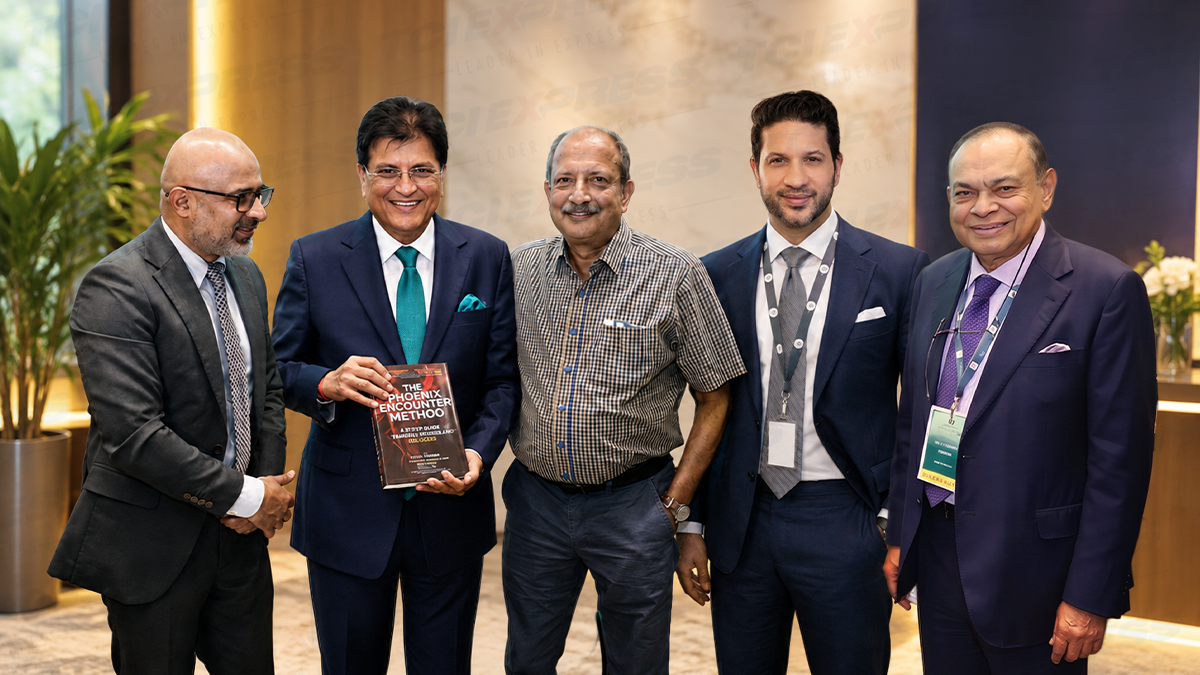
TCI EXPRESS Managing Director Mr Chander Agarwal recently participated in the India-Singapore Business Forum in Singapore as part of an Indian business delegation accompanying Shri Piyush Goyal, Hon'ble Minister of Commerce and Industry. The forum brought Indian and Singaporean business leaders together to discuss trade, investment and new areas of regional collaboration.
During the engagement, Mr Agarwal shared a logistics perspective on cross-border movement, resilient supply chains and efficient trade corridors. His participation reflected an important business reality: companies can enter new markets more confidently when goods, information and documents move through dependable connections.
TCI EXPRESS joins the India-Singapore Business Forum
The India-Singapore Business Forum was held at the INSEAD Asia Campus during Shri Piyush Goyal's visit to Singapore from 19 to 21 August 2026. The Ministry of Commerce and Industry said the visit included an Indian delegation of around 70 senior business leaders from sectors such as technology, manufacturing, infrastructure, financial services, healthcare, food and agriculture, logistics, maritime trade and professional services.
FICCI convened the forum in collaboration with other Indian industry associations. TCI EXPRESS also acknowledged the role of the Confederation of Indian Industry and ASSOCHAM in bringing business representatives together and supporting conversations about India-Singapore and wider regional ties.
The forum formed part of a broader programme around the fourth India-Singapore Ministerial Roundtable and the fourth India-Singapore Business Roundtable. Official briefings described B2B, government-to-business and institutional engagements focused on partnerships, investment, market access, technology collaboration and talent development.
Why India-Singapore business ties matter
Singapore is an important commercial partner for India and a useful gateway to business networks across Southeast Asia. According to the Ministry of Commerce and Industry, bilateral trade increased from USD 6.7 billion in FY 2004-05 to USD 36.1 billion in FY 2025-26. The Ministry also identified Singapore as India's largest trading partner within ASEAN in FY 2025-26.
The relationship extends beyond the value of goods traded. Businesses work across investment, technology, manufacturing, finance, healthcare, food, infrastructure and professional services. These connections create movement in both directions: products travel to customers and production sites, documents support border processes, replacement parts protect operations, and information follows every handover.
Singapore's role as a regional business centre also gives Indian companies an opportunity to understand requirements across the wider ASEAN market. These requirements can differ by destination, commodity, buyer, mode of transport and delivery arrangement. That is why business dialogue is useful. It helps companies compare opportunities with the practical work needed to serve them.
What Mr Chander Agarwal brought to the discussion
Mr Chander Agarwal serves as the Managing Director of TCI EXPRESS and is responsible for the company's strategic development and financial direction. His profile on the TCI EXPRESS leadership page also describes his experience in international business and the development of the company's overseas presence.
At the forum, Mr Agarwal highlighted the role of reliable connectivity in helping businesses expand and collaborate across economies. He shared perspectives on three closely related subjects:
- Cross-border logistics: connecting collection, international movement, customs-related documentation and delivery into a clear operating plan
- Resilient supply chains: preparing for interruptions, maintaining visibility and assigning responsibility when the original plan changes
- Efficient trade corridors: improving the links between production centres, airports, ports, logistics facilities and destination markets
These subjects are relevant to companies of every size. A large manufacturer may need regular movement across several countries. A growing business may begin with occasional commercial shipments. Both need accurate shipment information, suitable packaging, compliant documents, an accepted route and a clear delivery arrangement.
Mr Agarwal sees India-Singapore engagement as a long-term and collaborative opportunity. He remains committed to developing a clear TCI EXPRESS roadmap that can support stronger business connections between the two markets. This includes listening to companies operating across the region, understanding their changing logistics needs and contributing to practical solutions that make cross-border business easier to plan and manage.
His perspective also supports the wider objective of improving ease of doing business. Clear processes, dependable logistics connections and regular cooperation between government, industry bodies and companies can help businesses evaluate new markets with better information. For TCI EXPRESS, this means continuing to build regional knowledge and service capability in line with genuine customer requirements.
What reliable cross-border connectivity involves
Connectivity in trade means more than transport capacity between two countries. A usable cross-border service must connect several decisions and handovers.
Origin readiness
The shipper must provide the correct commodity description, package count, packed dimensions, actual weight, declared value and pickup information. Export documents and any product-specific certificates must be ready before the applicable cut-off.
Mode and route selection
The business must choose a mode that fits the cargo, required delivery date, cost and acceptance conditions. An air route may suit time-sensitive commercial goods, while other international supply chains may use sea, road, rail or a combination of modes. The complete door-to-door plan matters more than one scheduled departure.
Border and document coordination
Cross-border movement can involve invoices, packing lists, transport documents, customs declarations and commodity-specific permissions. Responsibility should be clear between the exporter, importer, logistics provider, customs broker and other authorised parties. Requirements vary, so a general article cannot replace shipment-specific customs, tax or legal advice.
Destination delivery
The consignee must be ready and authorised to receive the shipment. Local delivery conditions, business hours, duties or taxes, inspection requirements and proof of delivery can affect completion. A booking is not complete until the destination arrangement is understood.
Visibility and exception ownership
Customers need meaningful milestones across the complete journey. They should know who responds to a missed connection, documentation issue, customs hold or delivery exception, and which alternatives can be assessed. Clear communication is part of the service design.
How resilient supply chains support regional growth
A resilient supply chain can continue to serve its business purpose when conditions change. This does not mean that delays never happen. It means the operating model can detect a problem, protect the shipment, communicate the effect and evaluate an approved response.
Businesses planning India-Singapore or wider ASEAN movement can strengthen resilience by:
- Mapping suppliers, customers, production sites and critical lanes
- Identifying goods that require special acceptance or controlled conditions
- Separating routine replenishment from time-critical requirements
- Confirming document ownership before dispatch
- Defining important tracking milestones and escalation contacts
- Assessing alternative routes or modes for business-critical shipments
- Reviewing recurring exceptions instead of treating each one in isolation
This approach is especially useful when a company enters a new market. Initial shipment volumes may be uncertain, customer requirements may evolve and operating assumptions may need correction. Starting with accurate lane data and reviewing early movements can provide a stronger basis for expansion.
How TCI EXPRESS is developing its international presence
TCI EXPRESS has been extending its international presence as part of its wider business strategy. Its FY 2024-25 annual report states that a wholly owned subsidiary was incorporated in Singapore to serve as the company's regional representative and facilitate logistics and related services.
The company's International Air Express page describes services from major Indian airports, support for commercial and non-commercial shipments, third-country movements and selected exporter support services. Every shipment remains subject to route availability, commodity acceptance, documentation, customs requirements and applicable booking terms.
Within India, the wider TCI EXPRESS service portfolio can support the origin or destination side of a customer's supply chain through surface, domestic air, rail, e-commerce, full-truckload and specialised services. The appropriate arrangement depends on where the international responsibility begins and ends.
Participation in the India-Singapore Business Forum gives TCI EXPRESS direct exposure to the questions businesses are asking as they consider regional opportunities. It also creates space to hear from organisations involved in investment, manufacturing, technology and trade, each of which may have a different logistics requirement.
What businesses should define before expanding into a regional market
A useful logistics discussion begins with a specific business case. Companies considering India-Singapore or ASEAN trade should prepare:
- The origin, destination and proposed customer or supplier locations
- The commodity, value, dimensions, weight and packaging method
- Expected shipment frequency and seasonal volume
- The delivery requirement and business effect of delay
- Export, import and product-specific document responsibilities
- Preferred Incoterms and the party responsible at each handover
- Tracking, reporting and proof-of-delivery requirements
- Insurance, liability and exception-management expectations
- Alternative modes or routes for critical movements
A complete brief allows the logistics provider to assess serviceability, acceptance, route, transit and cost against the same requirement. Businesses can submit an international logistics enquiry or use the official TCI EXPRESS contact channels to begin a shipment-specific discussion.
Business forums turn regional opportunity into practical conversations
Trade relationships grow through policy cooperation, investment and direct contact between businesses. The India-Singapore Business Forum provided a place for these parts of the relationship to meet. Government representatives could describe the direction of bilateral cooperation, while companies could discuss the operational needs behind new investment and market access.
For the logistics sector, the value lies in understanding what must move, where it must go and what can prevent a successful delivery. A technology company, healthcare supplier, manufacturer and food exporter may all participate in the same regional economy, but they need different handling, documentation and delivery models.
TCI EXPRESS's participation brought this practical supply-chain view into the conversation. As regional business ties develop, dependable logistics will remain one of the connections between commercial intent and completed trade.
Looking ahead
The India-Singapore relationship offers a platform for businesses to explore new customers, partnerships, investment and regional networks. The official dialogue around technology, infrastructure, skills, sustainability and market access also shows how broad that opportunity has become.
TCI EXPRESS will continue listening to the needs of businesses operating across borders and developing the connections required to support them. The goal is practical: understand each shipment, build a workable route and help customers maintain visibility as their supply chains extend into new markets.
Frequently Asked Questions
What was the India-Singapore Business Forum?
The India-Singapore Business Forum brought Indian business leaders together with Singapore's business and investment community at the INSEAD Asia Campus. It took place during Commerce and Industry Minister Piyush Goyal's Singapore visit from 19 to 21 August 2026 and supported discussion on trade, investment and regional collaboration.
Who represented TCI EXPRESS at the forum?
Mr Chander Agarwal, Managing Director of TCI EXPRESS, participated as part of the Indian business delegation. He shared perspectives on cross-border logistics, resilient supply chains, efficient trade corridors and the importance of reliable connectivity for companies expanding across markets.
Why is Singapore important for Indian businesses?
Singapore is an important trade and investment partner for India and a major business centre in Southeast Asia. The Ministry of Commerce and Industry identified it as India's largest ASEAN trading partner in FY 2025-26, with bilateral trade of USD 36.1 billion.
What does cross-border logistics include?
Cross-border logistics can include origin pickup, packaging, route and mode selection, export documentation, customs processes, international movement, destination handling, delivery and shipment visibility. The exact arrangement depends on the commodity, countries, service scope, buyer-seller terms and applicable regulations.
Does TCI EXPRESS offer international shipment services?
TCI EXPRESS lists International Air Express among its services and has established a regional representative subsidiary in Singapore. Shipment acceptance depends on the route, commodity, dimensions, documentation, customs requirements and applicable terms, so customers should request a shipment-specific assessment.
How can a business discuss an India-Singapore logistics requirement?
Prepare the origin, destination, commodity, package dimensions, weight, value, frequency, required delivery date and document responsibilities. Submit these details through the TCI EXPRESS business enquiry page or contact the company for a route and service assessment.
References & Sources
- TCI EXPRESS official LinkedIn event post ↗
- Ministry of Commerce and Industry, Singapore visit and business delegation, 19 August 2026 ↗
- Ministry of Commerce and Industry, India-Singapore engagements, 20 August 2026 ↗
- FICCI, India-Singapore Business Forum ↗
- TCI EXPRESS Top Management ↗
- TCI EXPRESS International Air Express ↗
- TCI EXPRESS Annual Report 2024-25 ↗